


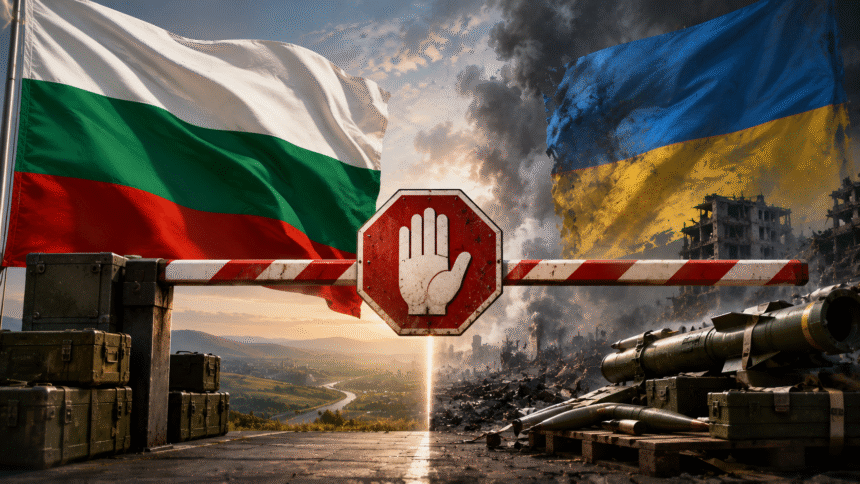
Bulgaria’s newly formed government has announced a halt to future weapons shipments to Ukraine, marking a significant shift in the country’s approach to the ongoing conflict and emphasizing diplomacy over continued military assistance.
Government officials stated that while Bulgaria remains committed to supporting international efforts aimed at achieving peace and stability in Europe, the current administration believes that diplomatic engagement and political negotiations should now take precedence over the provision of additional military aid.
The decision comes amid growing debate across Europe regarding the future of support for Ukraine and the prospects for a negotiated settlement to the conflict. Bulgarian leaders argued that recent diplomatic developments have created an opportunity to prioritize dialogue and reduce the risk of further escalation.
According to government representatives, the move does not signal a change in Bulgaria’s commitment to its allies within NATO and the European Union. Instead, officials described the policy as a recalibration of national priorities, focusing on diplomatic initiatives, humanitarian assistance, and regional stability.
The announcement has generated mixed reactions both domestically and internationally. Supporters of the decision argue that a political solution remains the only viable path toward a lasting peace and that continued military support alone cannot resolve the underlying causes of the conflict.
Critics, however, contend that reducing military assistance could weaken Ukraine’s ability to defend itself and may send an unintended signal regarding European unity. Several European governments have continued to stress the importance of maintaining support for Kyiv while pursuing diplomatic efforts in parallel.
Bulgaria has played a notable role in supporting Ukraine since the outbreak of the conflict, providing military equipment, ammunition, and logistical assistance through various arrangements. The new government’s decision is therefore being closely watched by both allies and observers as an indication of evolving political dynamics within Europe.
Analysts note that the move reflects broader discussions taking place across the continent regarding the balance between military assistance and diplomatic engagement. As the war continues to impact European security, energy markets, and economic stability, governments are increasingly debating the most effective path toward ending the conflict.
Despite suspending future weapons shipments, Bulgarian officials reaffirmed their support for Ukraine’s sovereignty and territorial integrity. They also expressed readiness to participate in international diplomatic initiatives aimed at securing a ceasefire and creating conditions for a long-term political settlement.
The decision is expected to remain a topic of discussion among European partners in the coming weeks as policymakers assess the implications for regional security and the future direction of European support for Ukraine.