

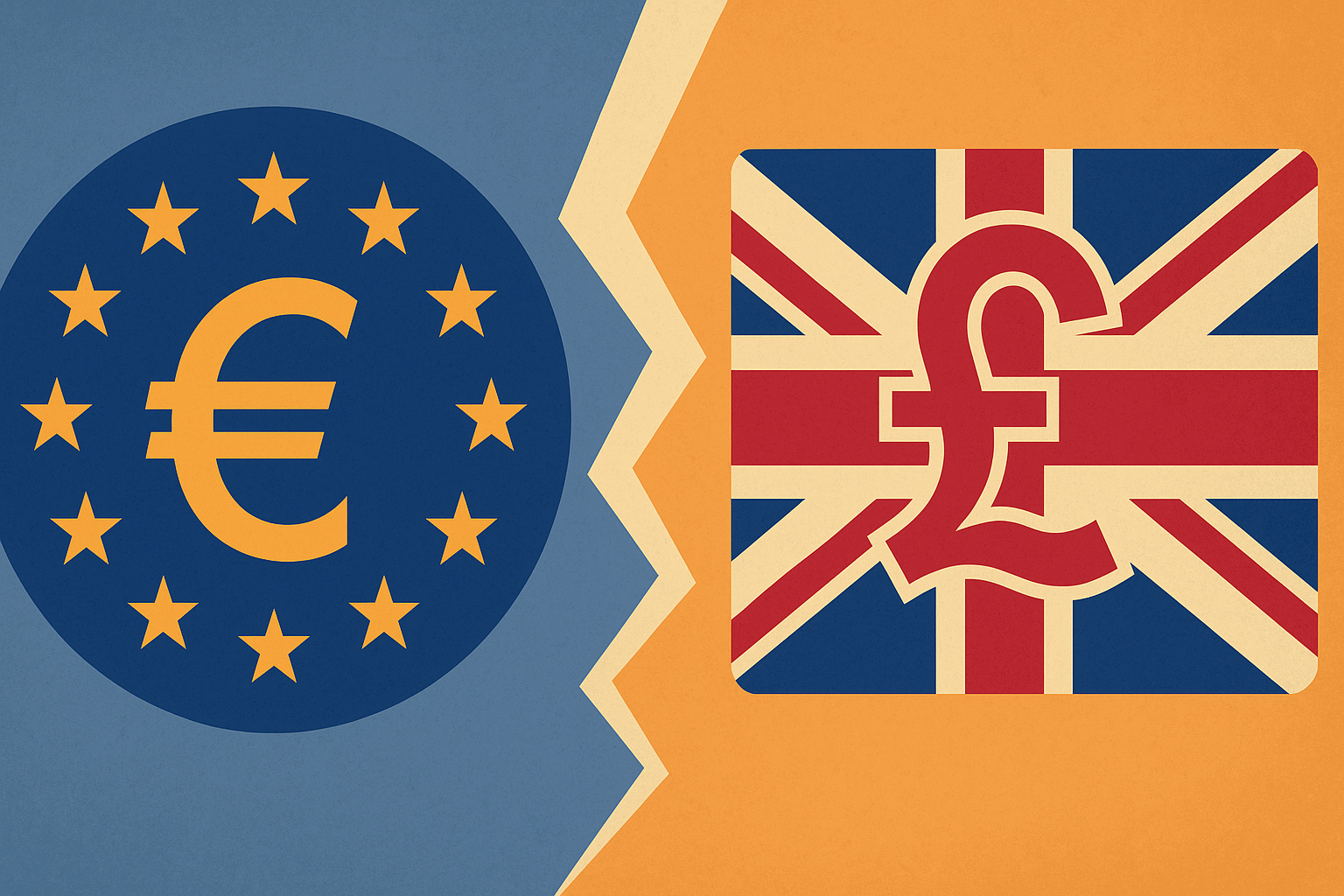
Efforts to rebuild relations between the European Union and the United Kingdom are facing early turbulence as disagreements over financial contributions threaten to overshadow newly approved talks aimed at reducing post-Brexit trade frictions.
EU ambassadors on Wednesday agreed to a negotiating mandate for the “reset” of relations announced at the Windsor summit in May. The agreement came after overcoming German-led resistance to proposals requiring the UK to pay into EU cohesion funds as part of a deal to reconnect EU and UK energy markets.
A Softened EU Position — but Tension Remains
While member states endorsed the broad mandate, the final text launching the talks was softened. Instead of stating that the EU “will establish” financial contributions required from the UK, it now says the EU “will reflect” on the appropriate level.
The revision followed pushback from Germany, the Netherlands, and several others, who opposed French-led demands for cohesion fund payments. Berlin argues London should only pay for future agreements, noting that the May summit did not require broad EU budget contributions.
An EU diplomat described the compromise as leaving a “Sword of Damocles” over the negotiations before they even start.
Starmer and von der Leyen Signal Commitment
In a call on Wednesday, UK Prime Minister Sir Keir Starmer and European Commission president Ursula von der Leyen reaffirmed their intention to move quickly on agreements reached in May. Downing Street said Starmer insisted that any new deals must deliver “tangible benefits” for the British public.
Von der Leyen described the call as “good,” signalling political will to proceed despite emerging disagreements.
Dispute Over Erasmus+ Contributions
One of the most immediate flashpoints involves the UK’s bid to rejoin the EU’s Erasmus+ student exchange programme. London is seeking a 50% discount on its financial contribution, arguing that re-entry must be cost-effective. The European Commission has countered with a 30% discount limited to 2027.
Several EU diplomats warned that the UK’s attempt to minimise costs may undermine goodwill. One described the UK’s stance as “penny-pinching,” adding that it risks making the negotiations appear overly transactional.
The Erasmus+ dispute is symbolic: for Brussels, UK participation is a test of “good faith” following former prime minister Boris Johnson’s decision to exit the programme.
Broader Budget Tensions
EU diplomats have repeatedly stressed that all third countries pay for access to EU markets and programmes. “If the UK is granted an exception, Norway and Switzerland will demand the same,” one diplomat said.
Lord Peter Ricketts, chair of the UK House of Lords’ European affairs committee, said that fulfilling the ambitions of the May summit was “a long and winding road.” He added that cohesion fund payments go beyond what was agreed, describing them as a “maximalist opening pitch” from the EU.
Second Money Dispute: EU Rearmament Programme
A separate disagreement has emerged over the UK’s participation in the EU’s €140bn Security Action for Europe (Safe) defence modernisation programme. Brussels wants the UK to contribute up to €6.7bn to join, arguing that its defence industry would benefit significantly.
France is pushing for a high entry price, though diplomats indicated negotiations could reduce the amount slightly. The UK faces a deadline of November 30 to join or risk missing the first round of project bidding.
Von der Leyen said both sides were continuing to work toward a “mutually beneficial outcome.”
Talks Moving Forward Amid Difficulties
Despite the tensions, UK officials said they were “pleased” with the progress made in clearing the way for negotiations. A UK government spokesperson reiterated the desire for a “broad and constructive relationship” with the EU, while declining to comment on the details of ongoing talks.
A senior EU diplomat acknowledged the complexity ahead: “Negotiations between the EU and the UK are always extremely difficult. I think we’ll get there. There is willingness on both sides to find solutions, but it’s hard work.”