

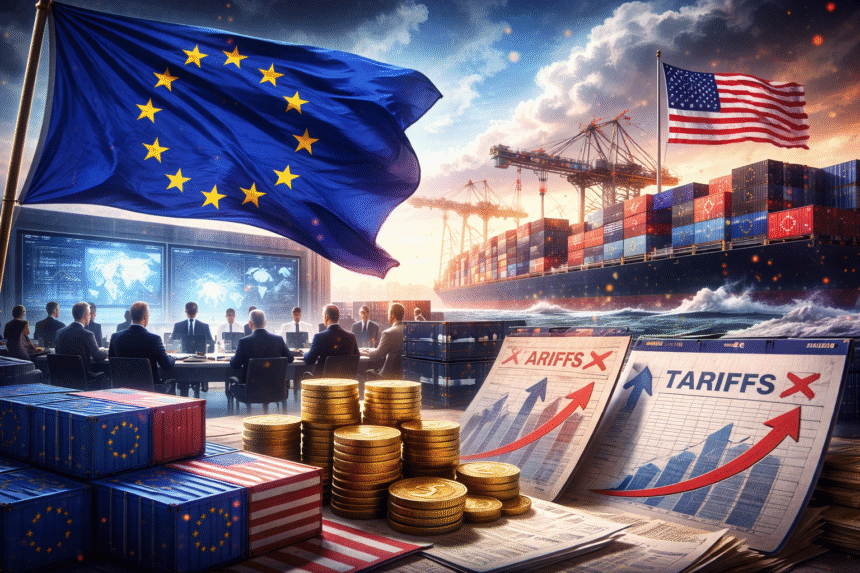
The European Union is preparing a package of response measures to counter any potential U.S. tariffs, as tensions escalate between Washington and European capitals over the crisis surrounding Greenland. The move reflects growing concern in Brussels that economic pressure could be used alongside political rhetoric to advance U.S. objectives in the Arctic.
EU officials say contingency planning is already underway in case the United States follows through on threats to impose tariffs on European goods. While no formal U.S. decision has been announced, European policymakers view the warnings as credible enough to warrant preparation. The European Commission has begun consultations with member states to identify sensitive sectors and agree on a unified response.
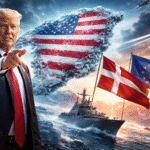
At the heart of the dispute is Greenland, an autonomous territory under Danish sovereignty. Recent statements from U.S. President Donald Trump asserting that Washington will not abandon its goal of controlling Greenland — and refusing to rule out coercive measures — have alarmed European leaders. The prospect of trade penalties has added an economic dimension to what was already a serious geopolitical confrontation.
Brussels has made clear that any unilateral U.S. tariffs would be met with proportional and legally grounded countermeasures, in line with World Trade Organization rules. EU officials stress that Europe does not seek a trade conflict but will defend its economic interests and political sovereignty if challenged. “Trade pressure cannot be used as a tool of geopolitical intimidation,” one senior EU diplomat said.
Denmark, backed firmly by its EU partners, has reiterated that Greenland’s status is not negotiable and that decisions about its future rest solely with the Greenlandic people. Several member states have argued that allowing economic coercion in this case would set a dangerous precedent, not only for Europe but for the wider international system.
The potential tariff dispute comes at a sensitive moment for transatlantic relations, already strained by disagreements over security, defense spending, and global trade rules. European leaders fear that an escalation could undermine cooperation within NATO and weaken Western unity at a time of heightened global competition, particularly in the Arctic region.
Analysts note that the EU’s preparations are as much political as economic. By signaling readiness to respond, Brussels aims to deter Washington from taking action while demonstrating internal cohesion. The message, officials say, is that Europe prefers dialogue and diplomacy — but is prepared to act if necessary.
As the situation develops, EU leaders are calling for de-escalation and renewed diplomatic engagement with the United States. However, with trade tools now entering the equation, the Greenland crisis risks evolving into a broader confrontation that could reshape transatlantic relations in the months ahead.