


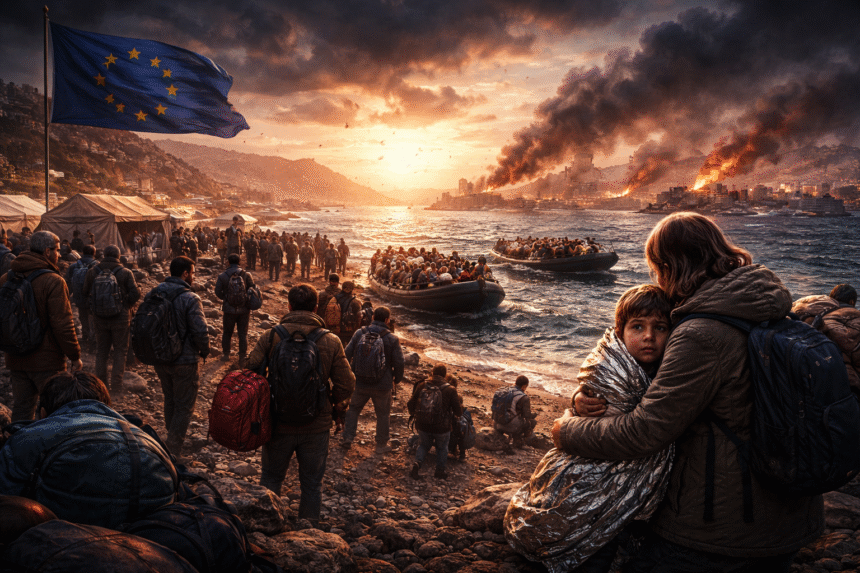
European Union leaders are raising concerns over the potential for a new wave of asylum seekers, as escalating conflicts across the Middle East threaten to trigger fresh displacement on a large scale.
Officials across the bloc warn that worsening security conditions, combined with humanitarian crises in several countries, could drive hundreds of thousands of people toward Europe in the coming months. The warning comes as migration systems in many EU member states remain under pressure from previous influxes.
The European Commission has called for heightened preparedness, urging member states to strengthen border management, expand reception capacity, and coordinate more closely on asylum procedures. Leaders emphasize that early action is critical to avoid the kind of political and logistical strain seen during past migration surges.
Countries along the EU’s external borders—particularly in Southern and Eastern Europe—are expected to be the first to feel the impact. Nations such as Greece and Italy are already monitoring increases in arrivals, while transit routes through Turkey and North Africa are becoming more active.
At the same time, divisions within the European Union are re-emerging over how to handle migration. Some governments are pushing for stricter border controls and faster deportation procedures, while others advocate for a more humanitarian approach, including relocation mechanisms and expanded legal pathways for asylum.
Humanitarian organizations have warned that deteriorating conditions in conflict zones—including shortages of food, water, and medical care—are forcing more people to flee. Many displaced families face dangerous journeys, often relying on smuggling networks to reach Europe.
The issue is also expected to carry significant political consequences. Migration has long been a sensitive topic in European politics, and a renewed surge could fuel debates around national security, economic capacity, and social integration—especially ahead of key elections in several countries.
In response, EU leaders are seeking to balance security concerns with humanitarian obligations. Efforts are underway to work with neighboring countries to manage migration flows, provide support for refugees closer to their regions of origin, and address the root causes of displacement.
While the scale of the potential influx remains uncertain, one thing is clear: Europe is preparing for another critical test of its unity, policies, and ability to respond to one of the most complex challenges facing the region today.