

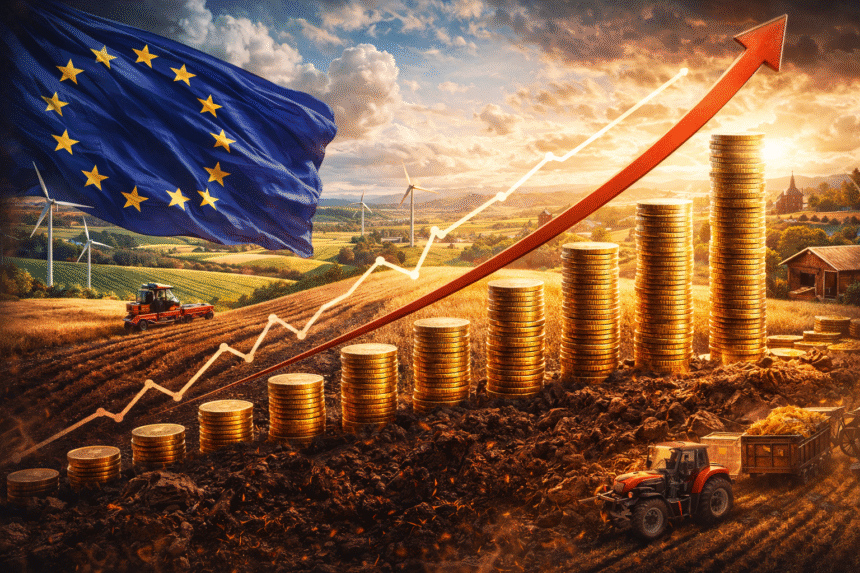
Agricultural land prices across the European Union increased by 6.1% in 2024 compared to 2023, highlighting mounting pressures on the agricultural sector driven by rising costs, climate challenges, and structural changes in food production.
According to newly released EU data, the steady rise in farmland values reflects strong demand for productive land, limited availability, and growing competition between agricultural use, environmental protection, and alternative land development. The increase marks one of the sharpest annual gains in recent years, intensifying concerns among farmers and policymakers about affordability and long-term sustainability.
Drivers Behind the Price Increase
Several factors have contributed to the surge in land prices. Rising input costs — including energy, fertilizers, and labor — have pushed farmers to seek more efficient and productive land to maintain profitability. At the same time, climate change has made high-quality, resilient farmland increasingly valuable, especially in regions less exposed to droughts and extreme weather.
EU officials also point to investment pressure, as institutional investors and large agribusinesses view agricultural land as a stable long-term asset amid global economic uncertainty. This trend has further reduced access for small and medium-sized farmers, particularly younger entrants to the sector.
Impact on Farmers and Rural Communities
The price rise poses significant challenges for farmers seeking to expand or even maintain their operations. Higher land costs increase debt burdens and raise barriers to entry, accelerating consolidation within the agricultural sector. Rural communities fear that this could lead to fewer family-owned farms and greater concentration of land ownership.
“Access to land is becoming one of the most critical issues for European agriculture,” an EU agriculture official noted, warning that unchecked price growth could undermine food security and rural livelihoods.
Policy Concerns and Future Outlook
The trend is already influencing policy debates in Brussels, particularly around the future of the Common Agricultural Policy (CAP). EU institutions are exploring measures to support young farmers, regulate speculative land purchases, and promote sustainable land use practices.
Looking ahead, analysts expect land prices to remain under upward pressure as climate adaptation, food security concerns, and green transition policies reshape Europe’s agricultural landscape. Without targeted interventions, the rising cost of farmland could become a long-term structural challenge for the EU’s farming sector.