


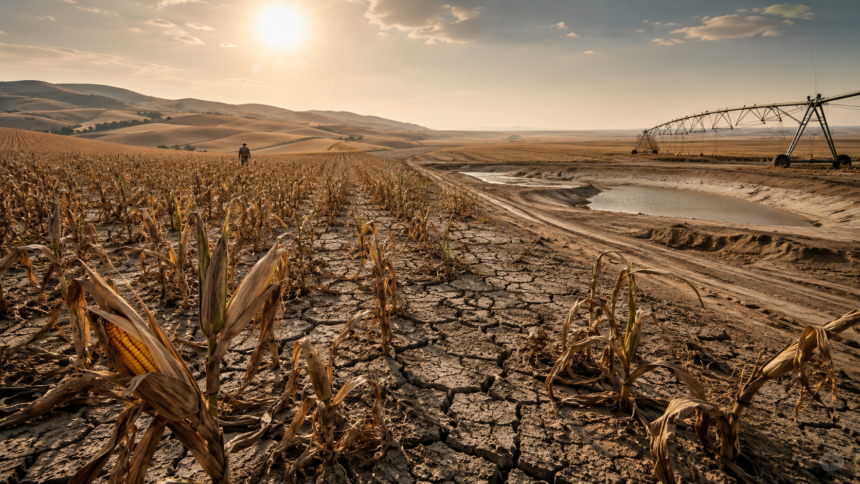
Severe drought, extreme heat and persistent water shortages are threatening corn production in Hungary and Romania, pushing the European Union’s harvest toward one of its lowest levels in nearly two decades.
The European Commission expects the EU’s 2026 corn harvest to fall to approximately 50.1 million metric tons. This would be around 20% below the recent average, reflecting the growing impact of climate-related disruptions on agriculture across Eastern Europe.
Hungary and Romania are among the EU’s most important corn-producing countries. However, repeated periods of low rainfall and unusually high temperatures have depleted soil moisture, reduced crop development and weakened yields across major agricultural areas.
Summer temperatures in parts of the region have risen more than three degrees Celsius above historical averages. Farmers say rainfall has become increasingly unpredictable, while prolonged dry conditions are making traditional cultivation schedules less reliable.
Hungary, which has historically exported substantial quantities of grain, could be forced to import corn to satisfy domestic demand. Such a shift would demonstrate the severity of the production decline and its effect on the country’s agricultural trade balance.
Romania is experiencing similar difficulties. Reduced yields are expected to limit the amount of corn available for export, potentially affecting customers that traditionally depend on supplies from the Black Sea region.
The declining harvest could have consequences beyond crop farming. Corn is widely used in animal feed, food manufacturing, biofuel production and industrial processing. Lower domestic supplies could increase production costs across several sectors and contribute to higher prices for consumers.
Some farmers are replacing corn with crops considered more tolerant of heat and drought, including sunflowers and certain varieties of sorghum. Others are investing in irrigation systems, although limited water availability and high installation costs reduce the effectiveness of this option.
Agricultural organisations have called for additional public support to modernise irrigation networks, improve water management and develop crop varieties capable of surviving longer periods of extreme heat. They also warn that emergency assistance alone will not address the structural changes affecting the region’s climate.
The European Union may need to increase corn imports to compensate for the weaker domestic harvest. Greater dependence on external suppliers could leave the bloc more exposed to international price fluctuations, transport disruptions and geopolitical instability.
Scientists and agricultural specialists warn that droughts in Hungary, Romania and neighbouring countries are becoming more frequent and severe. This trend could make annual corn production increasingly unstable and force a wider transformation of farming practices in Central and Eastern Europe.
The expected decline in the 2026 harvest therefore represents more than a single difficult season. It highlights the mounting economic and food-security challenges facing European agriculture as changing weather conditions place additional pressure on water resources, rural communities and traditional crops. Reuters