

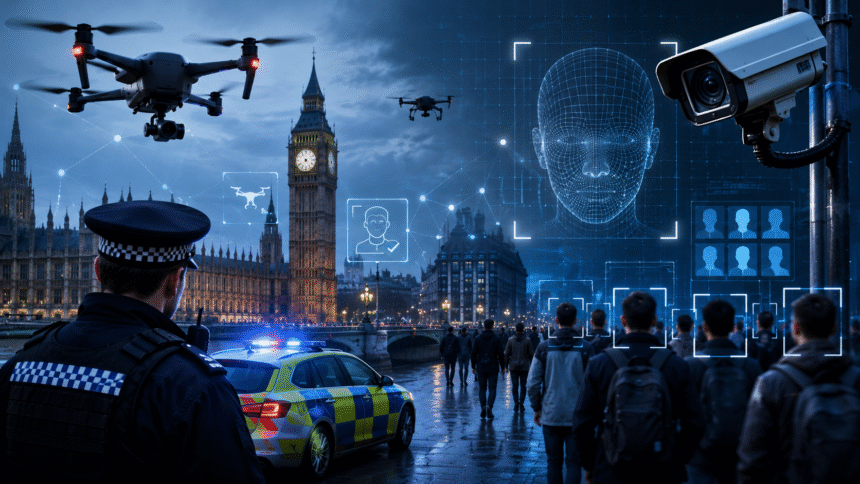
The initiative is designed to enhance the ability of law enforcement to monitor public spaces, respond more quickly to incidents, and identify individuals suspected of involvement in criminal activities. Police officials argue that advanced surveillance technologies can improve operational efficiency while helping officers respond to emerging security threats.
The proposed expansion includes greater deployment of drones for aerial monitoring during major public events, emergencies, and policing operations, alongside wider use of live facial recognition systems capable of comparing images captured in public locations with existing police databases.
Supporters of the technology say it provides valuable tools for locating wanted suspects, preventing violent crime, and improving public safety in busy urban environments. They argue that modern policing requires advanced technological capabilities to address increasingly complex security challenges.
However, the plans have sparked renewed debate among privacy advocates, legal experts, and civil rights organizations. Critics warn that expanding facial recognition and aerial surveillance could lead to excessive monitoring of the public, raise concerns about data protection, and increase the risk of errors or misuse without strong legal oversight.
The discussion reflects a broader challenge facing governments across Europe: balancing the use of emerging technologies to improve public security while safeguarding individual privacy, civil liberties, and public trust. As London continues to expand its digital policing capabilities, the debate over how these technologies should be regulated is expected to remain at the forefront of public and political discussion.