

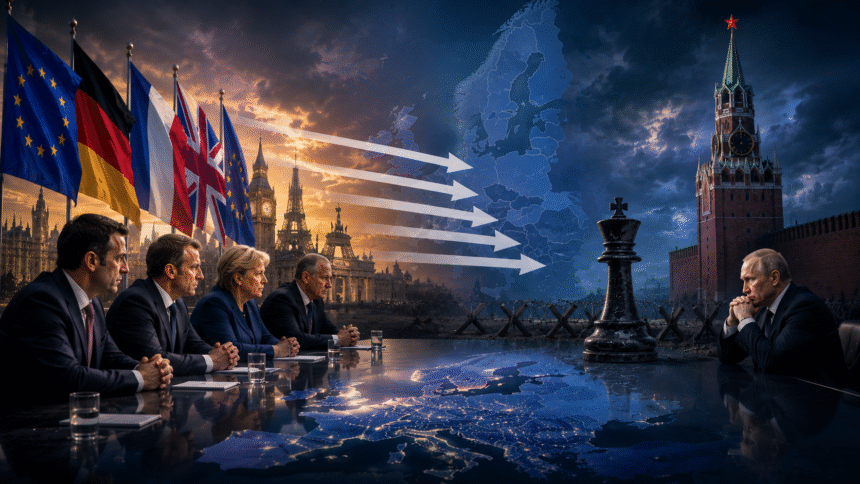
European capitals are intensifying diplomatic efforts aimed at pushing Russia toward renewed peace talks over the war in Ukraine, according to recent European reports. Despite the growing international pressure, the Kremlin continues to reject or avoid the initiatives presented so far.
Officials in several European countries, including Britain, France, and Germany, have increased consultations in recent weeks in an attempt to revive diplomatic channels and encourage de-escalation between Moscow and Kyiv. European leaders argue that prolonging the conflict carries serious security, economic, and humanitarian consequences for the entire continent.
The renewed diplomatic activity comes amid ongoing military confrontations in eastern and southern Ukraine, where fighting continues despite repeated calls from international actors for negotiations and ceasefire arrangements.
European governments have emphasized that any future political settlement must include guarantees for regional stability and European security. Diplomats in Brussels believe Europe should play a central role in any peace process due to the direct impact of the conflict on the continent’s economy, energy markets, migration flows, and defense policies.
However, according to European reports, the Kremlin remains resistant to the current proposals and continues to maintain firm positions regarding its military and political objectives in Ukraine. Russian officials have repeatedly stated that negotiations must reflect what Moscow describes as “new realities on the ground,” a position rejected by Kyiv and many Western governments.
Analysts say Europe is attempting to balance continued support for Ukraine with growing diplomatic efforts aimed at preventing a prolonged war of attrition. Rising energy costs, defense spending, and economic uncertainty have increased pressure on European governments to search for long-term political solutions.
At the same time, European leaders continue to coordinate sanctions and political pressure against Russia while maintaining military and financial assistance for Ukraine. Officials insist that diplomatic efforts do not signal a reduction in support for Kyiv but rather an attempt to create conditions for future negotiations.
The Kremlin’s refusal of current initiatives has complicated efforts to launch meaningful peace talks, leaving the conflict in a prolonged deadlock. Observers believe that major breakthroughs remain unlikely in the near future unless both sides show greater flexibility regarding negotiation conditions.
Despite the challenges, European diplomats say communication channels with Moscow remain open, stressing that continued dialogue is necessary to reduce the risk of wider escalation across Europe.
As the war continues, Europe faces the difficult task of balancing military deterrence, economic stability, and diplomatic engagement while trying to shape a future path toward peace in the region.