

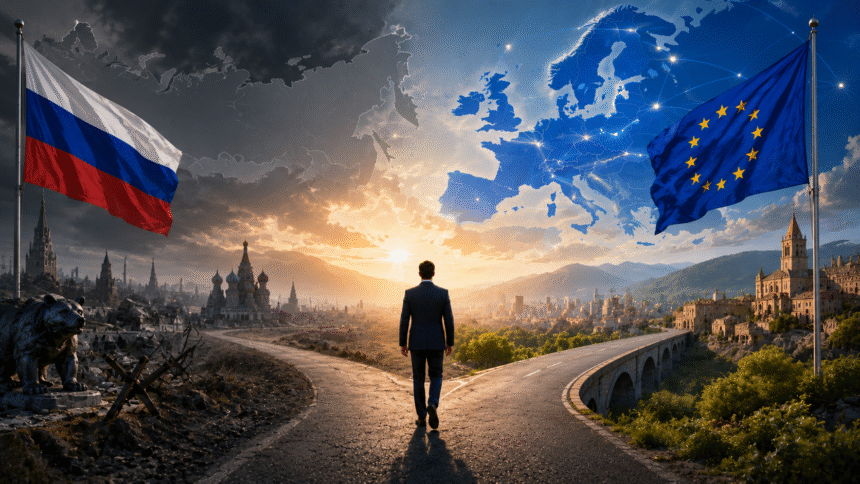
The political movement supporting closer relations with Europe in Armenia has strengthened its position following the country’s recent elections, highlighting Yerevan’s continuing shift toward Western partnerships and a gradual reduction of Russian influence in the region.
The election results were widely viewed by analysts as a reflection of changing public sentiment inside Armenia, where frustration has grown in recent years over security concerns, economic challenges, and dissatisfaction with Moscow’s role in regional conflicts.
Pro-European political forces gained momentum by advocating stronger cooperation with the European Union, democratic reforms, economic modernization, and broader international partnerships beyond Russia’s traditional sphere of influence.
The developments come as Armenia continues to reassess its foreign policy priorities following tensions in the South Caucasus and the aftermath of conflicts involving neighboring Azerbaijan. Many Armenians have increasingly questioned the effectiveness of Russia’s security guarantees and regional influence.
Armenian officials have recently expanded diplomatic engagement with European countries and Western institutions, while discussions regarding trade cooperation, governance reforms, and economic support with European partners have intensified.
The shift has also been reflected in Armenia’s growing participation in European political initiatives and increased dialogue with Western governments on issues related to security, infrastructure, energy, and democratic development.
At the same time, relations between Yerevan and Moscow have become more complicated. Russian officials have expressed concern over Armenia’s closer ties with Europe and what they view as a weakening of traditional alliances in the post-Soviet region.
Despite the political changes, Armenia remains economically and strategically connected to Russia in several sectors, including energy, trade, and military cooperation. Analysts note that Yerevan is unlikely to completely sever ties with Moscow in the near future, but rather seeks to diversify its international partnerships and reduce overdependence on a single ally.
The broader geopolitical competition between Russia and Western powers in the South Caucasus has intensified in recent years, with Armenia increasingly becoming a key focus of diplomatic influence for both sides.
European officials have welcomed Armenia’s reform efforts and signaled support for closer cooperation, viewing stability in the South Caucasus as strategically important for Europe’s long-term regional interests.
Observers believe Armenia’s political trajectory reflects wider changes occurring across parts of the former Soviet sphere, where some governments are gradually pursuing more balanced foreign policies amid shifting global alliances and regional uncertainties.
As Yerevan continues strengthening ties with Western partners, the country faces the challenge of balancing its historic relationship with Russia while navigating a rapidly changing geopolitical landscape in the region.