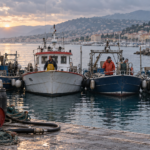



Odesa has once again come under Russian attack, after a new wave of drones and missiles struck the southern Ukrainian port city, injuring at least 14 people and damaging residential buildings and port infrastructure. Ukrainian officials said the attack included explosive drones launched overnight, with debris and direct hits reported across several areas of the city. Two children were among the injured, underlining the continued civilian cost of Russia’s aerial campaign.
The assault on Odesa carries both military and symbolic weight. The city is one of Ukraine’s most important maritime gateways on the Black Sea, and repeated strikes on its port facilities threaten not only local security but also Ukraine’s ability to maintain trade routes and supply corridors. Reports said a cargo vessel and an energy facility inside the port area were also affected, showing how Russia’s attacks continue to pressure Ukraine’s economic lifelines as well as its urban centers.
Ukraine’s air defenses managed to intercept a large number of incoming drones, but officials warned that the scale of Russia’s attacks is stretching the country’s protection systems. Ukraine’s Air Force said Russia launched 94 drones in the latest wave, with 74 intercepted. President Volodymyr Zelenskyy said Russia had launched nearly 1,900 drones, around 1,400 guided bombs, and 60 missiles in just one week, renewing Kyiv’s call for more advanced air-defense systems, especially Patriot batteries.
The attack reflects a broader Russian strategy: sustained pressure through mass drone and missile strikes, designed to exhaust Ukraine’s air defenses, damage infrastructure, and create fear among civilians. For Odesa, a city already central to the war’s economic and humanitarian dimensions, each new strike deepens the sense that the Black Sea front remains one of the conflict’s most vulnerable areas.
Kyiv is now urging its Western partners to accelerate deliveries of air-defense systems and ammunition. Ukrainian officials argue that interception success alone is not enough if Russia can continue launching attacks at such high volume. Without stronger protection, cities like Odesa will remain exposed to repeated strikes, and Ukraine’s ports, homes, and civilian infrastructure will continue to face the direct consequences of Russia’s escalation.