

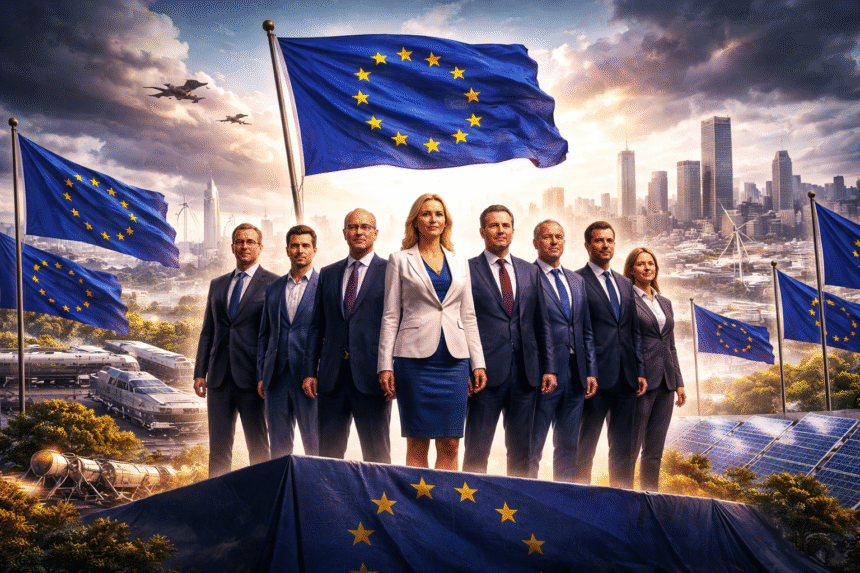
European leaders are intensifying efforts to reinforce the cohesion of the European Union, as the bloc faces growing pressure from global economic tensions, geopolitical instability, and shifting alliances. The push for unity comes at a critical moment, with policymakers seeking to safeguard Europe’s strategic interests in an increasingly uncertain world.
A Renewed Focus on European Unity
In recent meetings and summits, EU leaders have emphasized the need for stronger coordination across member states. From defense and energy to trade and technology, the goal is clear: present a more unified and resilient European front.
Officials argue that fragmentation within the bloc could weaken Europe’s ability to respond effectively to external challenges, particularly as global competition intensifies.
Responding to External Pressures
The European Union is currently navigating multiple layers of pressure:
- Rising geopolitical tensions in the Middle East and Eastern Europe
- Trade disputes with major partners, including the United States
- Continued economic uncertainty driven by energy market volatility
These developments have underscored the importance of collective action, with leaders calling for closer alignment on foreign policy and economic strategy.
Strategic Autonomy Back on the Agenda
A key theme emerging from recent discussions is the concept of strategic autonomy—reducing dependence on external actors in critical sectors such as energy, defense, and technology.
Several EU countries are advocating for:
- Increased investment in domestic energy production and infrastructure
- Stronger defense cooperation and joint military capabilities
- Expansion of Europe’s technological and industrial base
This approach is seen as essential to ensuring long-term stability and independence.
Economic Coordination and Policy Alignment
Beyond security concerns, European leaders are also working to improve economic coordination. Proposals under consideration include:
- Harmonizing fiscal policies across member states
- Strengthening the single market to boost internal trade
- Enhancing financial support mechanisms for vulnerable economies
Such measures aim to reduce disparities within the bloc and create a more balanced and competitive European economy.
Challenges to Unity Remain
Despite the momentum toward greater cohesion, significant challenges persist. Differences in national interests, economic priorities, and political perspectives continue to complicate decision-making within the EU.
Some member states remain cautious about deeper integration, particularly in areas such as defense and fiscal policy, where sovereignty concerns are more pronounced.
Looking Ahead
As Europe navigates a complex global landscape, the drive for unity is expected to remain a central priority. Upcoming summits and negotiations will likely focus on translating political commitments into concrete policies.
Conclusion
The effort to strengthen the European bloc reflects a broader recognition among leaders that unity is essential in the face of mounting international pressures. While obstacles remain, the direction is clear: a more coordinated, resilient, and strategically independent Europe.
The coming months will be crucial in determining whether these ambitions can be realized—or whether internal divisions will continue to limit the bloc’s potential on the global stage.