

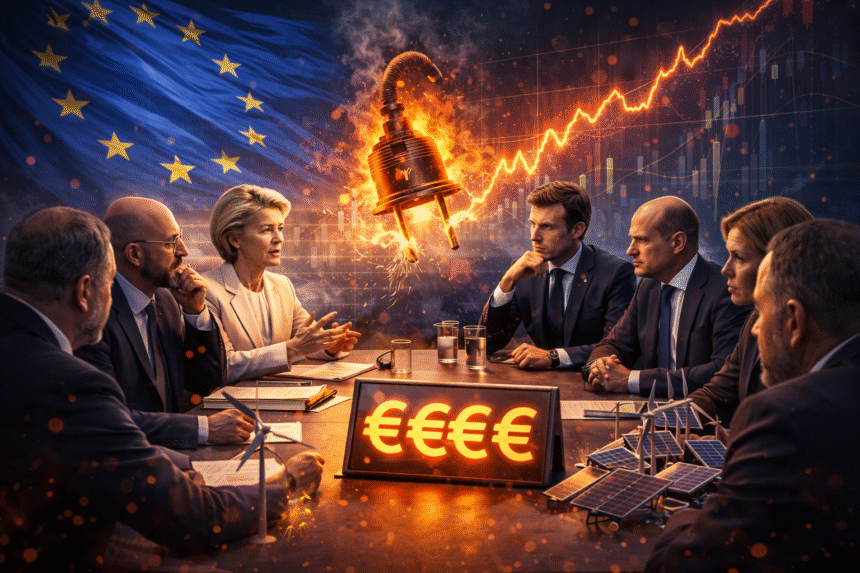
Leaders of the European Union are holding high-level discussions on urgent measures aimed at reducing rising energy prices that continue to pressure households, businesses, and national economies across the continent.
European officials say the surge in electricity and fuel costs is largely driven by global supply disruptions, geopolitical tensions, and instability in key energy-producing regions. The situation has prompted policymakers to explore coordinated strategies to stabilize markets and protect consumers.
Among the measures being discussed are temporary caps on electricity prices, increased joint purchasing of natural gas, and stronger coordination of energy reserves among EU member states. The European Commission, led by Ursula von der Leyen, has emphasized the need for collective action to prevent energy volatility from undermining economic recovery and industrial competitiveness.
EU leaders are also evaluating ways to accelerate investment in renewable energy sources such as wind and solar while strengthening energy infrastructure and interconnections between member states.
Several countries have called for expanded financial support to help vulnerable households and energy-intensive industries cope with rising costs, while others are pushing for long-term reforms to the EU electricity market to make pricing less dependent on gas.
Bottom line:
European leaders are seeking coordinated and immediate solutions to ease energy costs, aiming to stabilize markets, protect consumers, and strengthen the continent’s long-term energy security.