


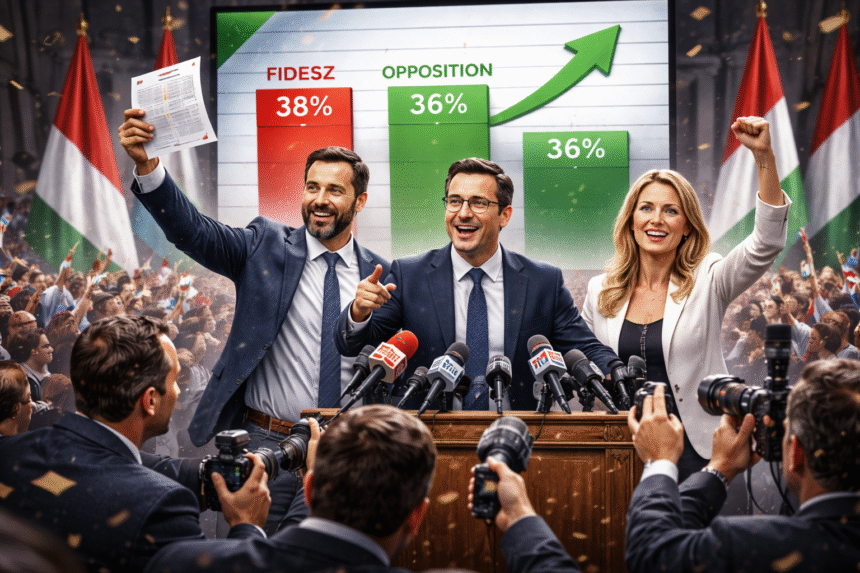
Opposition figures in Hungary say new opinion polls show their support closing in on Prime Minister Viktor Orban’s ruling Fidesz party, signaling a potentially more competitive race ahead of the next elections.
According to opposition leaders, recent surveys indicate a steady rise in backing for opposition alliances and candidates, driven by voter concerns over inflation, the cost of living, public services, and democratic standards. They argue that the data reflects growing dissatisfaction among undecided and urban voters who have traditionally been harder for the opposition to mobilize.
Fidesz, which has dominated Hungarian politics for more than a decade, continues to lead in most national polls, benefiting from a strong rural base, tight control of messaging, and Orban’s emphasis on national sovereignty and security. However, analysts note that even a modest narrowing of the gap could change campaign dynamics and increase pressure on the ruling party.
Opposition parties have sought to frame the polling trend as evidence that coordinated campaigning and a clearer policy platform are beginning to resonate with voters. Several opposition figures stressed the importance of unity, warning that fragmentation could still undermine their chances despite improved polling numbers.
The ruling party has dismissed the opposition’s claims, arguing that government-backed polls continue to show a comfortable lead for Fidesz. Officials have accused opposition groups of selectively citing data to create momentum ahead of the campaign.
With months remaining before the elections, political observers caution that polling in Hungary can fluctuate and may not fully capture voter behavior on election day. Nonetheless, the latest figures suggest a tighter race than in previous cycles, raising the stakes for both the government and its challengers as campaigning intensifies.