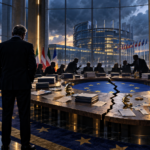


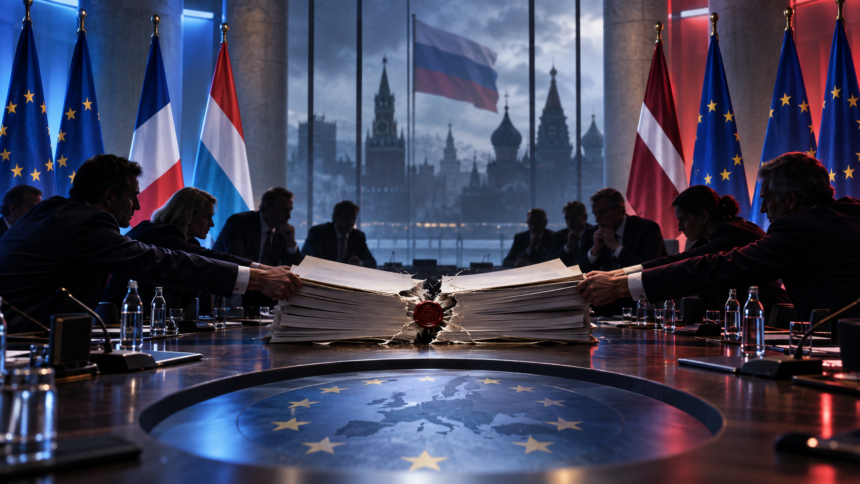
The European Union is facing a new test of unity after representatives of its member states failed to agree on extending sanctions against Russia. The dispute centres on demands from France and Luxembourg to remove two prominent Russian businessmen—Alisher Usmanov and Mikhail Fridman—from the EU sanctions list.
Latvia has strongly opposed the proposed delistings, arguing that easing restrictions on influential Russian figures would weaken Europe’s collective response to the war in Ukraine. Because decisions concerning EU sanctions generally require unanimous approval from all 27 member states, a single government can prevent the bloc from reaching an agreement.
The disagreement comes at a sensitive moment, as European governments seek to demonstrate continued support for Ukraine while confronting growing political and economic pressure at home. The EU’s sanctions regime includes restrictions on individuals, companies, financial institutions and sectors considered important to the Russian economy or its military capabilities.
France has reportedly supported removing Usmanov from the sanctions list, while Luxembourg has pushed for Fridman’s delisting. However, Latvia fears that accepting these requests could establish a dangerous precedent in which individual member states use the sanctions-renewal process to advance separate national interests.
Usmanov is a Russian billionaire with extensive interests in mining, telecommunications and investment. Fridman is a co-founder of the Alfa Group conglomerate and has challenged sanctions imposed on him through European legal channels. Both men have disputed the grounds for the restrictions placed upon them.
The issue highlights a structural weakness in the EU’s foreign-policy system. Sanctions require repeated political approval, giving every member state leverage during negotiations. While unanimity is intended to protect national sovereignty, critics say it can make the bloc vulnerable to internal bargaining and delay important decisions during international crises.
European diplomats are now attempting to find a compromise that preserves the wider sanctions framework without creating deeper divisions among member states. Possible solutions could include extending the broader measures while continuing separate legal and political discussions concerning the two businessmen.
Ukraine has urged the EU to maintain pressure on Moscow and warned against removing sanctioned individuals without compelling evidence. Kyiv fears that any visible weakening of European restrictions could be interpreted by the Kremlin as a sign that Western unity is beginning to erode.
The standoff is therefore about more than two names on a sanctions list. It represents a broader struggle over whether the European Union can maintain a common foreign policy when national interests diverge. Unless an agreement is reached, the dispute could damage the credibility of the sanctions regime and expose further divisions in Europe’s approach toward Russia.