


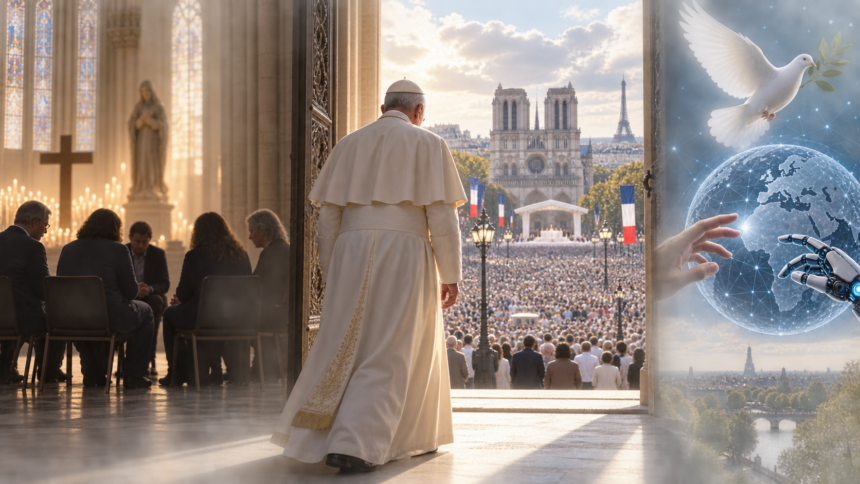
Pope Leo has begun a four-day visit to France as the Catholic Church continues to confront the consequences of widespread sexual-abuse scandals and growing demands for accountability from survivors.
The visit, covering three French cities, is the first papal trip to the country in nearly two decades. It is expected to combine religious ceremonies with difficult discussions about abuse, institutional responsibility and the Church’s declining credibility among sections of French society.
A central part of the programme will be a meeting with survivors in Lourdes. The encounter is intended to acknowledge their experiences and demonstrate the Vatican’s commitment to listening to those harmed by clergy and other Church representatives.
The visit comes five years after an independent French investigation estimated that approximately 330,000 children had suffered abuse by priests, clergy members or people connected to Catholic institutions over a period of seven decades. The scale of the findings shocked France and intensified pressure for compensation, transparency and structural reform.
Survivors’ organisations continue to argue that public apologies must be accompanied by stronger action. Their demands include opening Church archives, reporting suspected offenders to civil authorities and ensuring that officials who concealed abuse face consequences.
Pope Leo is expected to address these concerns while emphasising reforms introduced to improve safeguarding and prevention. However, the trip will also draw attention to unresolved cases and criticism that institutional change has been too slow.
The pontiff’s programme includes a major outdoor Mass in Paris expected to attract hundreds of thousands of worshippers. He is also scheduled to pray at the restored Notre-Dame Cathedral, providing a symbolic moment linking the Church’s historical presence in France with efforts to rebuild public confidence.
Beyond internal Church issues, the Pope is expected to discuss war, European unity and the protection of human dignity. His speeches will likely include appeals for peace at a time when conflicts in Europe and the Middle East continue to cause displacement and humanitarian suffering.
Artificial intelligence will also feature prominently in his public remarks. Pope Leo is expected to call for stronger international rules to ensure that AI systems remain subject to human oversight and do not undermine dignity, employment or fundamental rights.
The Vatican has increasingly treated artificial intelligence as an ethical and social issue rather than a purely technological one. Church leaders have expressed concern about autonomous weapons, algorithmic discrimination, misinformation and the concentration of technological power in the hands of a limited number of governments and corporations.
The trip is therefore intended to carry two messages: that the Church must confront its past failures and that it still seeks a role in addressing the moral challenges of the modern world.
Whether the visit can restore trust remains uncertain. For many survivors, credibility will depend on concrete measures taken after the ceremonies have concluded. Nevertheless, the decision to meet victims directly places the abuse crisis at the centre of the papal visit rather than treating it as a secondary issue.
Pope Leo’s journey through France will ultimately be judged not only by the scale of the crowds attending his Masses, but also by whether his words are followed by transparency, justice and lasting institutional reform.