


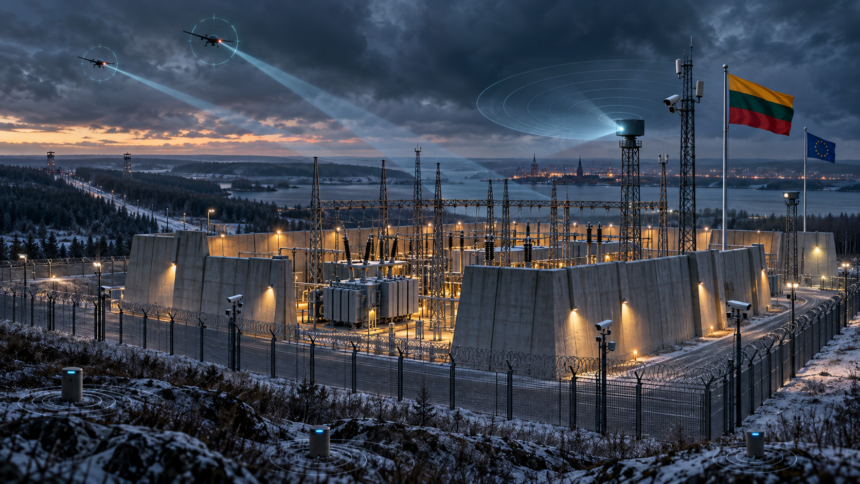
Lithuania has begun constructing a heavily fortified electricity substation near Russia’s Kaliningrad exclave as part of wider efforts to protect the Baltic region’s critical infrastructure from sabotage and explosive drone attacks.
The facility, known as the Gizai substation, will be a crucial component of the planned Harmony Link electricity connection between Lithuania and Poland. The project is intended to strengthen energy security and reinforce the Baltic states’ independence from the Russian-controlled power system.
Unlike a conventional power plant, Gizai will not generate electricity. Instead, it will manage and distribute power within the regional grid while supporting electricity exchanges between Lithuania and Poland.
The site is being designed to withstand threats that would once have been considered part of a military battlefield. Plans reportedly include reinforced concrete barriers, secure perimeter fencing, underground sensors and protective structures surrounding essential electrical equipment.
Critical components will be placed inside concrete enclosures designed to limit damage from explosives. Important systems will also be duplicated so electricity can continue flowing if part of the facility is damaged. Special cooling equipment is planned to keep protected systems operating inside the reinforced structures.
Lithuanian officials are particularly concerned about explosive drones similar to the Iranian-designed Shahed aircraft widely used in the war in Ukraine. These relatively inexpensive drones can travel long distances and carry enough explosives to seriously damage transformers and other vulnerable grid equipment.
The project reflects growing concern across Europe about the security of power stations, undersea cables, pipelines and communications networks. Governments along NATO’s eastern frontier have warned that critical infrastructure could be targeted through sabotage, cyberattacks or deniable operations intended to remain below the threshold of conventional warfare.
Gizai’s location gives the project additional strategic importance. The facility will be built close to Kaliningrad, a heavily militarised Russian territory situated between Lithuania and Poland.
The Baltic states completed their separation from the Russian electricity system and connected to the continental European grid, but authorities believe physical infrastructure must now be protected against emerging security threats. The new substation is expected to help Lithuania maintain power supplies even if individual components come under attack.
These defensive measures will significantly increase the cost of construction. Lithuania and Poland are therefore seeking additional support from the European Union, arguing that countries located on the bloc’s eastern frontier should not be expected to carry the full financial burden of protecting infrastructure that supports Europe’s wider energy security.
The fortified Gizai project illustrates how Russia’s war against Ukraine has transformed European infrastructure planning. Electricity facilities are no longer being designed solely around reliability and commercial efficiency; protection against drones, explosives and organised sabotage is becoming an increasingly important requirement.