Severe summer heat waves have caused a substantial decline in Europe’s potato harvest, raising concerns about shortages and higher prices across the continent in the coming months.
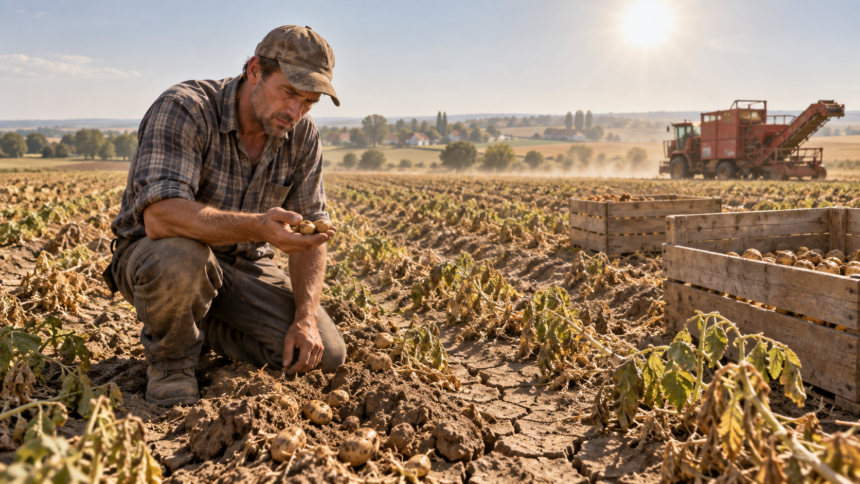
Germany, France, Belgium, and the Netherlands—four of Europe’s leading potato-producing countries—have all been affected by extreme heat and insufficient rainfall. Prolonged dry conditions restricted crop growth, leaving many potatoes too small to meet the requirements of food processors and retailers.
Current forecasts indicate that European production could fall from approximately 27.3 million tonnes in 2025 to between 19.5 million and 20.5 million tonnes in 2026. The decline could result in millions of tonnes being removed from the market and hundreds of millions of euros in losses for producers.
The situation follows an unusually large harvest in 2025, when excess supplies caused prices to collapse. In response, some farmers reduced the area planted with potatoes this year. That reduction, combined with repeated heat waves and drought conditions, has intensified the present shortage.
Northern France and other important growing regions were particularly affected. High temperatures disrupted plant development, while the lack of moisture prevented many potatoes from reaching the size required for products such as French fries and crisps.
Market prices have already responded. Processing potatoes reportedly reached as much as €250 per tonne, compared with around €30 per tonne a year earlier. However, many farmers may not fully benefit because they previously signed contracts at lower prices based on expectations of another strong harvest.
Existing stocks could help European processors and supermarkets maintain supplies through the Christmas period. The shortage is expected to become more noticeable by Easter, when stored potatoes begin to run low and the next European harvest is still months away.
Food manufacturers may respond by increasing imports, adjusting production, or using smaller potatoes. Consumers could ultimately face higher prices for fresh potatoes and processed products, although the effect will vary between markets and retailers.
The decline also highlights the growing vulnerability of European agriculture to extreme weather. Potatoes require relatively stable temperatures and sufficient water during key stages of development, making the crop particularly sensitive to prolonged heat and drought.
Farmers and industry groups are calling for greater investment in irrigation, heat-resistant varieties, water management, and more flexible supply contracts. Without stronger adaptation measures, increasingly frequent heat waves could make European potato production—and food prices—more unpredictable.