

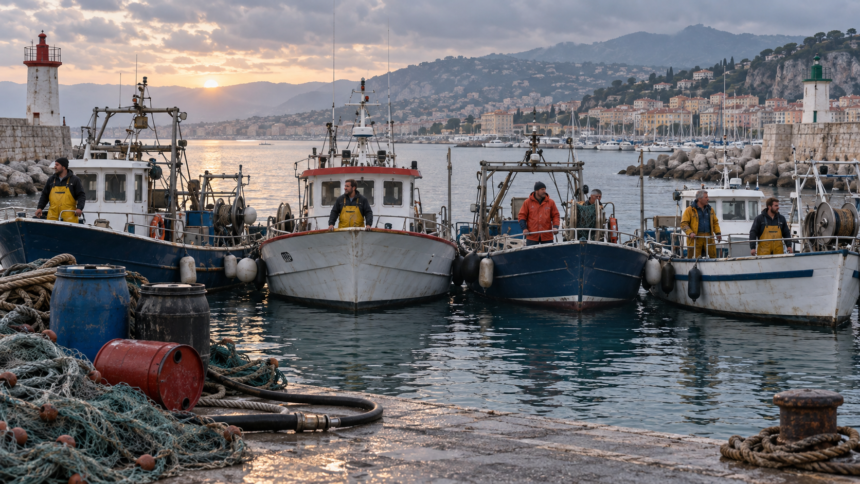
French fishermen have blocked ports in southern France, including the port of Nice, to protest against rising fuel costs that they say are threatening the future of their industry.
Fishing vessels and demonstrators disrupted port activity as part of wider pressure on the government to provide additional financial support. Industry representatives say fuel has become one of their largest operating expenses, leaving many crews struggling to cover costs and keep their vessels at sea.
The protests come as France faces renewed economic pressure caused by volatile global energy markets. Higher fuel prices have also affected farmers, construction companies, transport operators, and other sectors that depend heavily on diesel and marine fuel.
In response, Prime Minister Sébastien Lecornu’s government extended emergency fuel subsidies for the fishing, agricultural, and construction industries until the end of the year. However, fishermen argue that temporary assistance does not provide the long-term stability needed to protect jobs and coastal communities.
The port blockades are unfolding at a politically sensitive moment as the government prepares its 2027 budget. Finance Minister Roland Lescure has acknowledged that France is expected to miss its 2026 deficit target, increasing pressure on officials to reduce public spending while avoiding measures that could trigger further unrest.
Budget negotiations remain difficult. Opposition parties have warned that they may reject the government’s plans if they include unpopular austerity measures, such as limits on pension increases or reductions in household support.
President Emmanuel Macron is expected to consult party leaders as the government searches for enough political backing to pass the budget. The discussions are likely to focus on the deficit, energy costs, social spending, and the economic consequences of international instability.
For France’s fishing industry, the dispute extends beyond the immediate price of fuel. Fishermen also face declining catches, tighter environmental regulations, competition from imported seafood, and rising maintenance and labour expenses.
The port blockades illustrate the challenge facing the French government: controlling the deficit while responding to industries that say they cannot absorb further increases in operating costs. Unless a longer-term agreement is reached, fishing groups could expand their protests to additional ports.