

By using this site, you agree to the Privacy Policy and Terms of Use.
Accept
Euro Post.Euro Post.
Notification Show More
Aa
  • My Europe
    • Europe News
    • Social Issues
    • Immigration
    • EU Policies
    • EU Updates
  • World
    • Africa
    • Global Conflicts
    • Human Rights
    • Middle East
    • Latin America
    • Ukraine Crisis:
  • Business
    BusinessShow More
    Lamborghini Unleashes the Temerario: A Hybrid Supercar Poised to Surpass the Huracán
    July 26, 2025
    Is Waze Nearing the End of the Road? Google Maps Growth Raises Questions About the Future of the Navigation App
    July 26, 2025
    Germany Secures Fourth Conviction in €195 Million EU-Wide VAT Fraud Case Tied to Covid Mask Scam
    July 25, 2025
    AstraZeneca Commits $50 Billion Investment in U.S. Amid Tariff Pressures
    July 23, 2025
    ASML Shares Fall as Trump-Era Tariff Fears Cloud 2026 Growth Outlook
    July 17, 2025
  • Sport
  • Travel
  • Culture
    • Art/Design
    • Literature
    • Music
    • Film – TV
    • Fashion
Reading: Thales Calls for International Framework to Regulate Artificial Intelligence
Share
Aa
Euro Post.Euro Post.
  • My Europe
  • World
  • Business
  • Sport
  • Travel
  • Culture
Search
  • My Europe
    • Europe News
    • Social Issues
    • Immigration
    • EU Policies
    • EU Updates
  • World
    • Africa
    • Global Conflicts
    • Human Rights
    • Middle East
    • Latin America
    • Ukraine Crisis:
  • Business
  • Sport
  • Travel
  • Culture
    • Art/Design
    • Literature
    • Music
    • Film – TV
    • Fashion
Follow US
  • Advertise
© 2021 Euro Post Agency.com. All Rights Reserved.
Euro Post. > Blog > My Europe > Europe News > Thales Calls for International Framework to Regulate Artificial Intelligence
Europe News

Thales Calls for International Framework to Regulate Artificial Intelligence

World News
By World News Published September 17, 2026
Share

French defence and technology company Thales has called for an international framework to govern the development of artificial intelligence, warning that technical safeguards alone may not be sufficient to keep increasingly powerful systems under human control.

Thales chief executive Patrice Caine said governments must play a central role in establishing clear rules for the development and use of AI. He argued that maintaining control over the technology is primarily a question of governance rather than simply an engineering challenge.

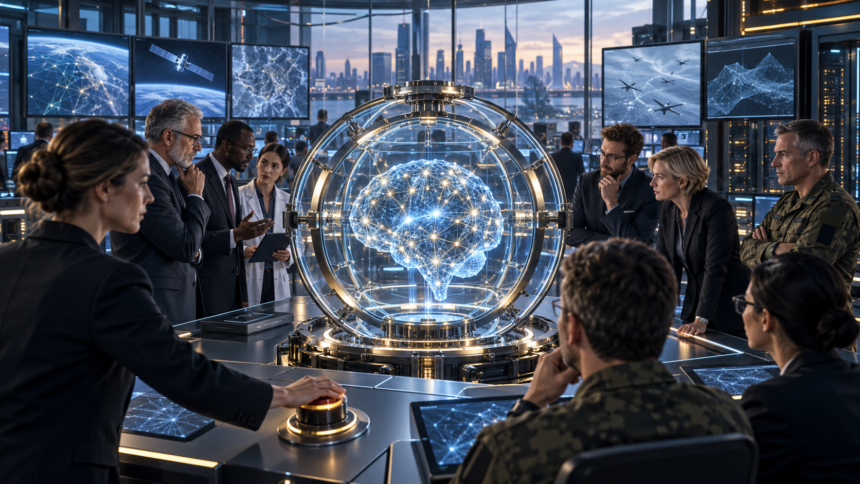
The company issued the warning while presenting new military technologies that use artificial intelligence to process information collected by drones, satellites, sensors, and other battlefield systems. Such tools can help commanders identify threats, interpret large volumes of data, and make decisions more quickly.

However, the expanding military use of AI has raised concerns about accountability, human oversight, and the possibility of automated systems making or influencing life-and-death decisions. Thales is therefore calling for common international standards defining how these technologies should be tested, supervised, and deployed.

The debate is also connected to Europe’s campaign for greater technological sovereignty. European governments and companies are seeking to reduce their dependence on American and Chinese technology providers, particularly in strategically sensitive sectors such as defence, artificial intelligence, cloud computing, and data infrastructure.

Concerns have intensified following NATO’s adoption of the Maven Smart System developed by US-based Palantir Technologies. Although the platform offers advanced data-analysis capabilities, its use has prompted questions about Europe’s reliance on foreign companies for critical military technologies.

Thales is developing its own AI-powered defence systems, including Hexaforce, as part of an effort to provide European armed forces with alternatives that can be operated under European security and data-governance standards.

French officials have also backed the push for greater technological independence. They argue that Europe must develop its own AI models, computing infrastructure, and defence platforms to maintain control over sensitive information and avoid strategic vulnerability.

Establishing a global regulatory framework will be difficult, particularly as major powers compete for technological and military advantage. Governments may be reluctant to accept restrictions that could slow innovation or place their defence industries at a disadvantage.

Nevertheless, Thales maintains that international cooperation is necessary to establish minimum safeguards and preserve meaningful human control. The company’s intervention highlights the growing tension between the rapid adoption of military AI and the slower development of rules governing how it should be used.

You Might Also Like

New European Reform Tightens Oversight of E-Commerce Imports

Heat Waves Cause Sharp Decline in Europe’s Potato Harvest

French Fishermen Block Ports Over Rising Fuel Prices

Germany Calls for Wider European Tariffs on Chinese Cars

Europe Asks China to Limit Hybrid Car Exports

World News September 17, 2026 September 17, 2026
Share This Article
Facebook Twitter Whatsapp Whatsapp Email Print
What do you think?
Love0
Sad0
Angry0
Dead0
Previous Article French Fishermen Block Ports Over Rising Fuel Prices
Next Article Heat Waves Cause Sharp Decline in Europe’s Potato Harvest

Stay Connected

16k Like
85k Follow
45.6k Subscribe
Telegram Follow
- Advertisement -

Latest News

New European Reform Tightens Oversight of E-Commerce Imports
Europe News
Heat Waves Cause Sharp Decline in Europe’s Potato Harvest
Europe News
French Fishermen Block Ports Over Rising Fuel Prices
Europe News
Germany Calls for Wider European Tariffs on Chinese Cars
Europe News
Loading

Stay Informed,Europ’s Vioce Unfolded

Sign Up for Our Newsletter

Subscribe to our newsletter to get our newest articles instantly!

Loading
© 2022 Euro Post Agency. All Rights Reserved.