

Ukrainian authorities have rejected Russian claims that drones launched by Ukraine attempted to strike President Vladimir Putin’s residence, calling the allegations “fabricated narratives” aimed at justifying further military escalation.
Russian officials reported earlier that several drones were intercepted near sensitive sites, including areas close to Putin’s residence, but offered limited evidence. Moscow framed the incident as proof of what it described as Kyiv’s “terrorist tactics.”
Ukraine, however, said it had no involvement in such an operation. A senior Ukrainian security official stated that Russia “uses staged or exaggerated attacks to mobilize public opinion and legitimize continued aggression.”
A war showing no sign of ending
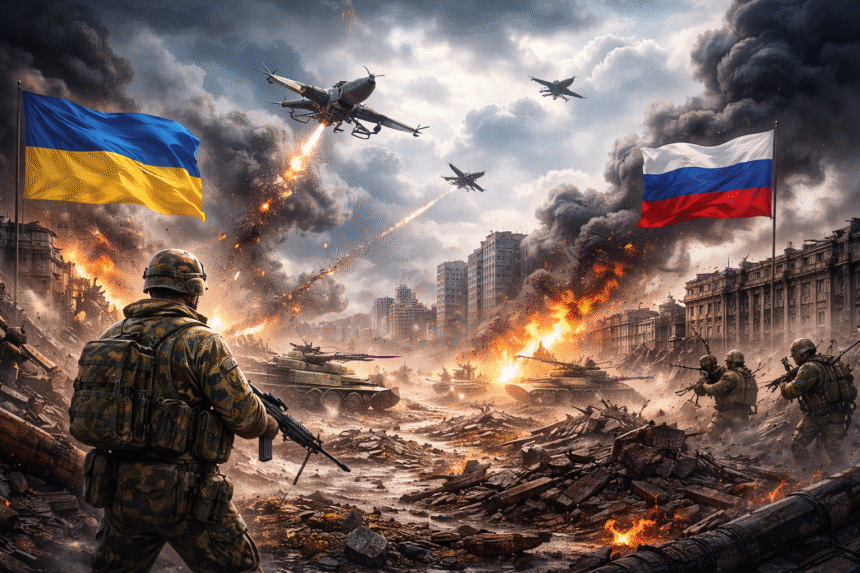
The exchange of accusations comes as intense fighting continues across eastern Ukraine, particularly near front-line regions where artillery duels, drone warfare, and missile strikes remain frequent.
Military analysts say both sides are adapting rapidly:
- Russia continues to target infrastructure and logistics hubs.
- Ukraine relies heavily on drones and precision strikes to disrupt supply routes.
- Civilians in contested areas face repeated power outages, displacement, and rising humanitarian needs.
International organizations warn that winter conditions could further worsen the situation, especially for communities already struggling with damaged utilities and limited aid access.
Political messaging on both sides
For Kyiv, denying involvement in high-profile attacks on Russian leadership is part of a broader strategy to maintain diplomatic support among Western allies, particularly those wary of escalation beyond Ukrainian territory.
For Moscow, accusations against Ukraine help reinforce the narrative that Russia is defending itself from outside threats rather than waging an offensive war.
Several European leaders stressed that the latest claims — verified or not — underline the need for renewed diplomatic efforts, even as military realities make negotiations difficult.
Global implications remain significant
The conflict continues to reshape security policies across Europe, with NATO reinforcing its eastern flank and EU states debating long-term military and financial support packages for Kyiv.
Energy markets also remain sensitive to developments in the war, as infrastructure vulnerabilities raise fears of renewed supply disruptions.
Outlook: uncertainty persists
While both governments continue to exchange accusations, the battlefield situation remains largely stagnant yet highly destructive. Neither side appears ready for major concessions, raising the likelihood of a prolonged, grinding conflict.
For millions of civilians in Ukraine — and for neighboring countries watching closely — the question remains not whether the war will escalate again, but how deeply its ripple effects will spread.