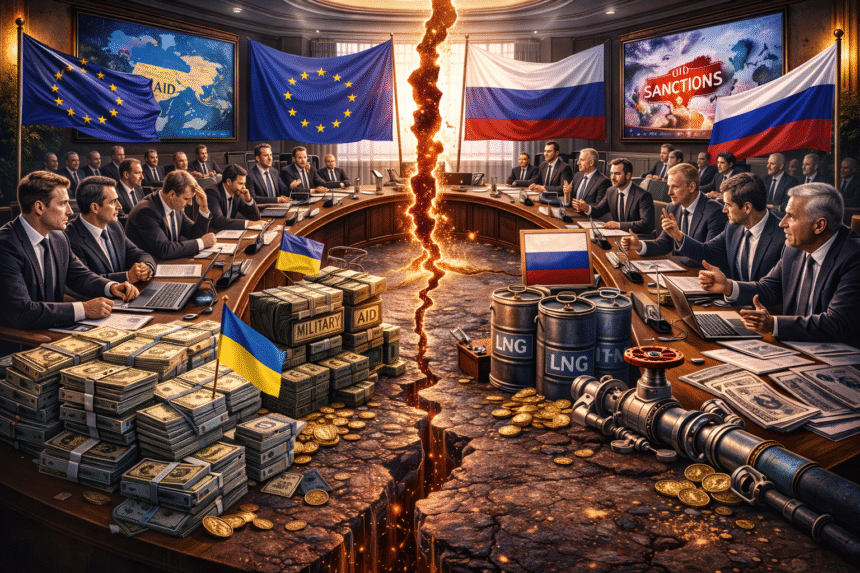
European Union officials are facing renewed internal divisions over continued financial support for Ukraine and the proposed 20th sanctions package on Russia, according to diplomatic sources familiar with ongoing negotiations in Brussels.
The debate highlights growing strains within the bloc as the war in Ukraine continues into another year, testing political unity, economic resilience, and public support across member states.
Disagreements Over Ukraine Funding
At the center of the dispute is a proposed multi-billion-euro financial support tranche aimed at stabilizing Ukraine’s budget, sustaining reconstruction efforts, and supporting military assistance.
While several EU member states — particularly in Northern and Eastern Europe — advocate for sustained or increased funding, others have expressed concerns about:
- Budgetary pressures at home
- Long-term financial commitments
- Oversight and transparency mechanisms
- The impact of continued aid on domestic politics
Some governments are reportedly pushing for stricter accountability conditions tied to reforms and anti-corruption safeguards before approving additional disbursements.
The 20th Sanctions Package
Parallel negotiations are underway on what would become the 20th round of EU sanctions against Russia since the invasion of Ukraine.
The proposed measures reportedly include:
- Expanded restrictions on Russian energy exports
- Tighter controls on dual-use technologies
- Additional asset freezes and travel bans
- Further limitations on financial transactions
However, diplomats say consensus is proving difficult. Certain member states remain wary of expanding sanctions that could:
- Disrupt energy markets
- Impact key industrial sectors
- Trigger retaliatory trade measures
- Increase inflationary pressures
Countries with stronger economic ties to Russia or higher energy dependency have reportedly called for a more calibrated approach.
Unity vs. Economic Strain
EU leaders have consistently emphasized solidarity with Ukraine and a unified stance against Moscow. Yet behind closed doors, economic realities are shaping national positions.
The prolonged conflict has already contributed to:
- Elevated energy prices
- Inflation across the eurozone
- Fiscal strain on government budgets
- Political polarization in some member states
Analysts note that maintaining unity becomes more complex as the economic costs accumulate.
🇪🇺 Institutional Balancing Act
European Commission officials are working to broker compromises that preserve collective credibility while accommodating domestic concerns of individual member states.
Diplomatic sources suggest possible outcomes may include:
- Phased implementation of sanctions
- Targeted exemptions for sensitive sectors
- Revised funding structures tied to performance benchmarks
Despite differences, EU officials publicly maintain that the bloc remains committed to supporting Ukraine and sustaining pressure on Russia.
What Comes Next
Negotiations are expected to continue in the coming days, with high-level meetings aimed at narrowing gaps before formal votes.
Observers in Brussels caution that while disagreements are not unusual within the EU, the stakes are particularly high: the outcome will signal whether the bloc can maintain strategic cohesion amid mounting political and economic pressures.
For now, the message from Brussels is clear — unity remains the objective, but consensus requires delicate compromise.