

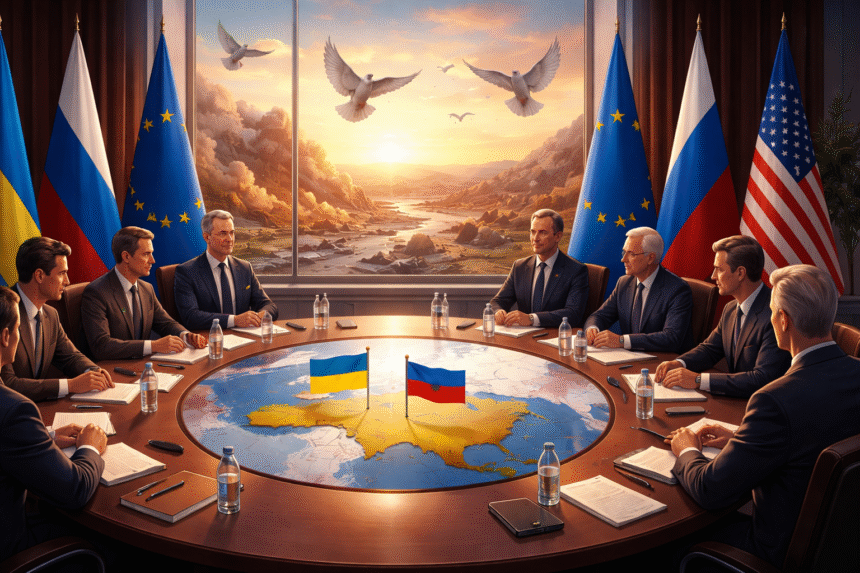
European-led diplomatic efforts to end the war in Ukraine have entered a critical phase, as President Volodymyr Zelensky announced that comprehensive peace plans could be formally presented to Russia within days. The announcement follows intensive talks held in Berlin involving Ukrainian officials, key European leaders, and representatives from the United States.
According to Zelensky, negotiations have made progress on nearly 90% of the most complex and contentious issues, marking what he described as the most serious diplomatic momentum since the early stages of the conflict. The remaining points, while sensitive, are no longer considered insurmountable, officials familiar with the discussions said.
The Berlin meetings focused on several core pillars of a potential settlement, including security guarantees for Ukraine, future territorial arrangements, international monitoring mechanisms, and the phased lifting or adjustment of sanctions linked to compliance. While no final text has been made public, diplomats emphasized that the framework aims to balance Ukraine’s sovereignty and security concerns with broader European stability.
European leaders involved in the talks stressed that the initiative is coordinated closely with Washington, reflecting a unified Western approach. They also underlined that presenting the plan to Moscow does not imply concessions, but rather an attempt to test Russia’s willingness to engage seriously in a negotiated end to the war.
Zelensky reiterated that Ukraine’s position remains firm: any peace agreement must respect international law and provide credible, long-term security guarantees to prevent renewed aggression. “This is not about freezing the conflict,” he said, “but about building a durable peace that cannot be easily broken.”
The coming days are expected to be decisive. If the proposal is delivered to Moscow as planned, international attention will quickly turn to Russia’s response—whether it signals readiness for dialogue or rejects the initiative outright. For Europe, the moment represents a rare opening to translate diplomatic pressure and military realities into a potential political resolution after years of war.