

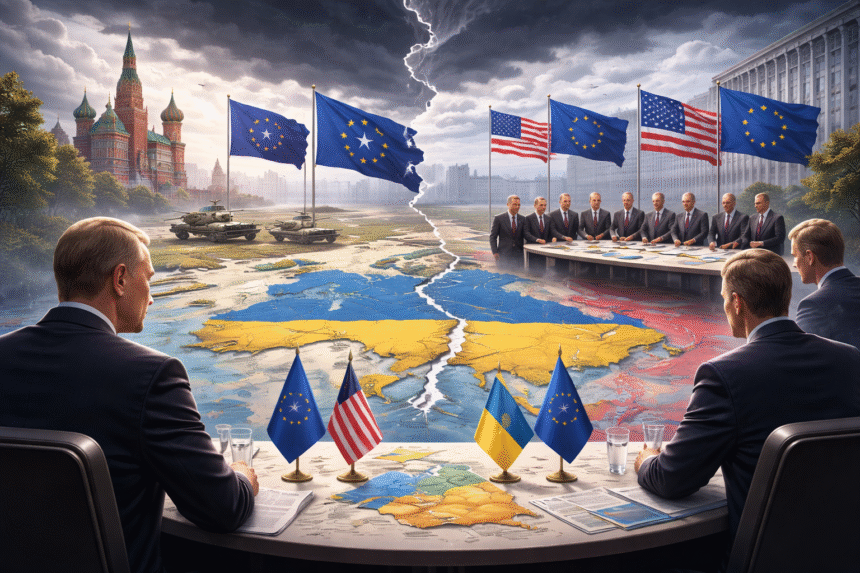
The Kremlin has sharply criticized European efforts to modify a U.S.-backed plan aimed at ending the war in Ukraine, warning that such interventions risk prolonging the conflict rather than resolving it.
Russian officials said that attempts by European capitals to introduce additional political and security conditions into the American framework have complicated negotiations at a critical stage. According to Moscow, the original U.S. initiative focused on creating a pathway toward de-escalation, while European revisions are seen as reinforcing confrontation and delaying compromise.
The criticism comes amid intense diplomatic activity involving Washington, Brussels, and Kyiv, as the war approaches another year with no decisive military outcome. Russian authorities argue that peace efforts must remain realistic and focused on ending hostilities, not reshaping the conflict’s outcome through expanded demands or security guarantees.
European officials, however, defend their position, stating that any sustainable peace must account for Europe’s long-term security interests, including Ukraine’s sovereignty and regional stability. Several EU leaders have expressed concern that a rushed agreement could leave unresolved risks and undermine international norms.
The United States has not publicly rejected European input but has emphasized the importance of maintaining a unified Western position. Analysts note that diverging approaches between Washington and European capitals could weaken diplomatic leverage and complicate efforts to bring all parties to the negotiating table.
Observers see the Kremlin’s remarks as part of a broader strategy to drive a wedge between the U.S. and Europe, portraying Moscow as open to negotiations while casting European governments as obstacles to peace. Whether this narrative gains traction will depend on how closely allied positions remain aligned in the coming weeks.
As fighting continues on the ground in Ukraine, the dispute highlights a central challenge facing diplomacy: balancing the urgency of ending the war with competing visions of what a lasting peace should look like—and who gets to define it.