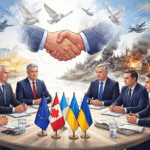


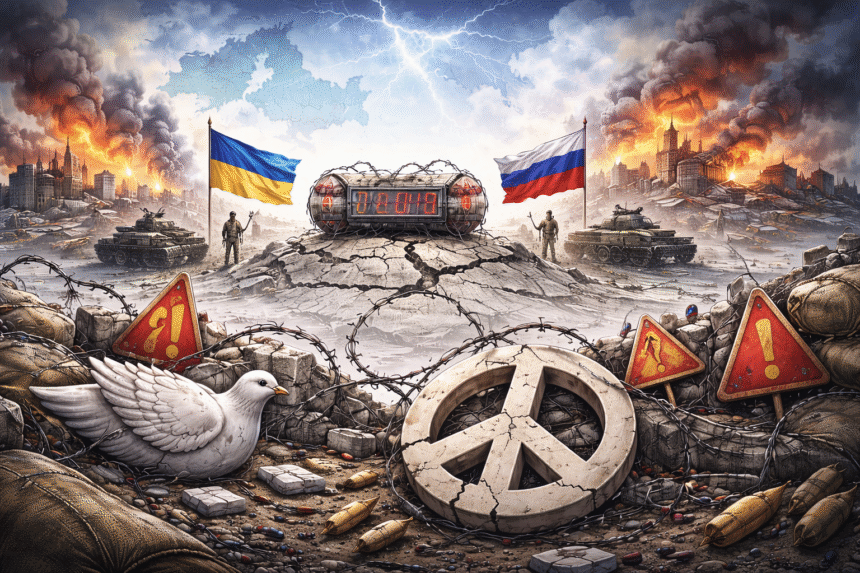
A new policy report has cautioned that growing discussion about a potential ceasefire in the Russian-Ukrainian war could create serious long-term risks for Europe if the terms are vague, incomplete, or improperly enforced.
The study — produced by regional security analysts — argues that simply “stopping the fighting” without addressing core political and territorial questions may freeze the conflict rather than resolve it. Such an outcome, the report suggests, would leave Europe facing a fragile peace, renewed instability, and repeated cycles of violence.
A Ceasefire Without Guarantees Could Backfire
According to the report, a ceasefire that locks in battlefield lines without accountability could:
- legitimize territorial gains made by force,
- encourage similar military strategies elsewhere, and
- undermine international law and European security norms.
Analysts warn that any agreement must include strong guarantees for Ukraine’s sovereignty, mechanisms to deter future aggression, and clear pathways for monitoring and verification.
Pressure for Peace — and Rising Fatigue
Across Europe, governments face intense public pressure tied to the conflict’s economic fallout — including energy strain, inflation, and defense spending increases. While many citizens support ending the war, experts caution that a rushed settlement could ultimately prove more costly.
“Peace must be durable, not temporary,” the report states, stressing that unresolved disputes may simply pause the fighting — only for hostilities to erupt again under worse conditions.
Security Balance and NATO Concerns
The report highlights that a poorly structured ceasefire could weaken deterrence across Eastern Europe, forcing NATO countries to invest more heavily in forward defenses. It also warns of a possible surge in cyberattacks, disinformation campaigns, and political destabilization efforts if Russia perceives little consequence for military escalation.
Ukraine’s Position Remains Firm
Kyiv maintains that any peace effort must begin with respect for internationally recognized borders, accountability for war crimes, and guarantees that prevent renewed invasion. Several European leaders support that stance, arguing that negotiations must not reward forceful annexation.
A Warning — Not a Rejection of Peace
Despite its cautionary tone, the report does not dismiss negotiations altogether. Instead, it calls for a structured process combining diplomacy, security guarantees, humanitarian relief, and international oversight.
The conclusion is stark: a ceasefire may be necessary — but without carefully designed conditions, it could destabilize Europe instead of protecting it.