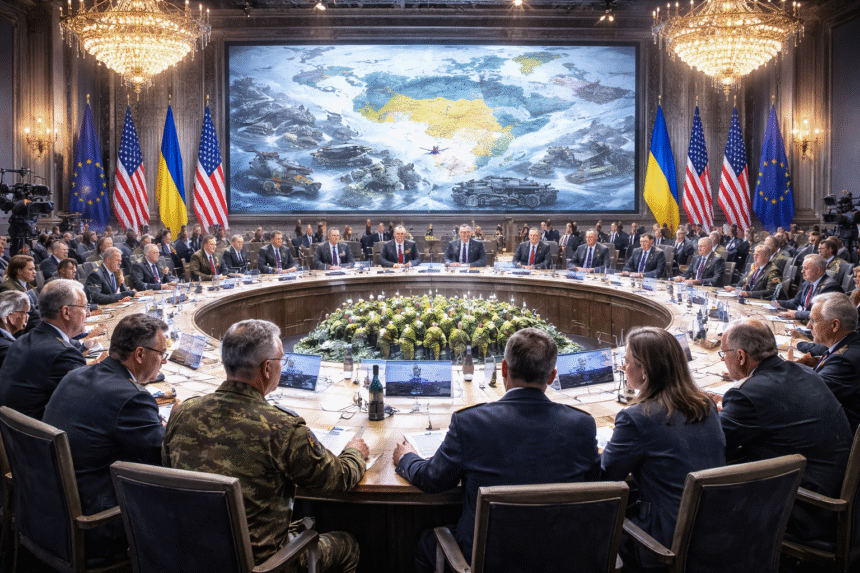
Paris — The United States is signaling its willingness to back a European-led multinational defense force for Ukraine that could be deployed after a ceasefire with Russia, as Western allies gather in Paris to discuss post-war security guarantees.
Leaders and envoys from about 35 countries, including major European governments and senior U.S. representatives, met on January 6 under the banner of the so-called Coalition of the Willing to chart a strategy for securing Ukraine’s future if fighting should pause.
Draft Plan: European Lead, U.S. Support
According to draft documents prepared ahead of the talks, Washington could take a central role in monitoring and verifying any ceasefire, working with European partners to ensure that hostilities do not resume. Under the same framework, the U.S. would support a European-led multinational force — providing key capabilities such as intelligence, logistics, and backing in the event of renewed aggression.
The multinational contingent would be tasked with stabilizing post-war Ukraine, safeguarding its air, sea, and land domains, and helping to rebuild its military strength after years of conflict. While European nations would provide the core leadership and personnel, the U.S. commitment is expected to be pivotal in ensuring deterrence against future threats.
Strategic Goals and Ongoing Negotiations
The initiative is part of a broader effort to forge binding security guarantees that would reassure Kyiv and deter further Russian incursions once a ceasefire is agreed. Discussions include potential commitments to military, logistical, and diplomatic support — as well as additional sanctions if needed — underscoring a united Western approach to Ukraine’s defense.
However, final details are still under negotiation. Officials have not formally confirmed the exact size or composition of the force, or the precise conditions under which U.S. support would activate. Political considerations in both the United States and Europe — including domestic approval processes for deploying troops or resources — add complexity to the final agreement.
Diplomatic Balance at the Summit
The summit in Paris aims to align U.S. and European positions on security assurances even as other diplomatic issues — including transatlantic tensions over unrelated geopolitical matters — complicate the broader landscape. Despite these challenges, participants emphasize the importance of a coordinated deterrent mechanism that links collective commitment to Ukraine’s long-term security.