

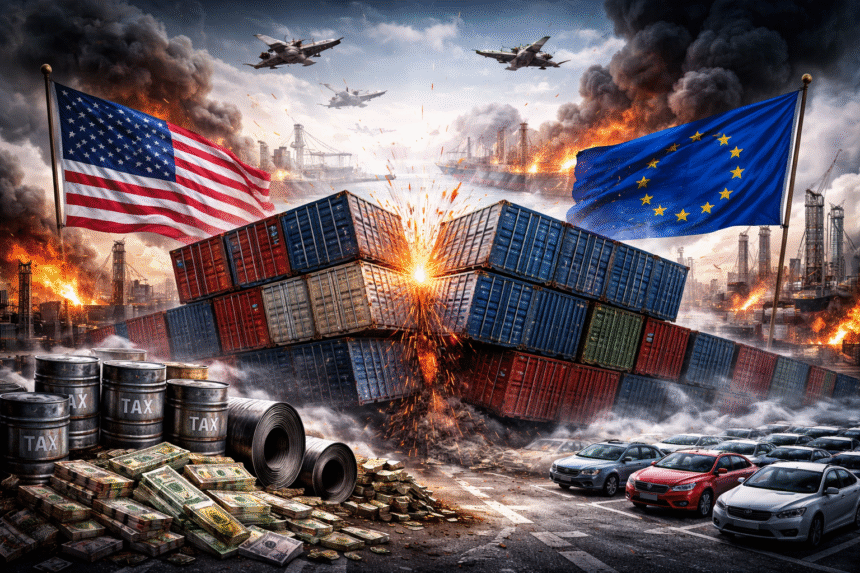
A new wave of economic tension is unfolding between Europe and the United States, as Washington’s renewed threats to impose tariffs on European goods trigger strong reactions across the continent. The dispute marks a significant strain in transatlantic relations at a time when both sides face mounting global challenges.
Tariff Threats Spark Immediate Concern
The United States has signaled the possibility of imposing new tariffs targeting key European exports, including automobiles, industrial machinery, and agricultural products. The move is framed as part of a broader effort to protect domestic industries and address trade imbalances.
European officials, however, view the threats as politically motivated and economically disruptive, warning that such measures could undermine years of cooperation between the two allies.
Europe Prepares a Strong Response
In response, the European Union is considering a range of countermeasures. These include:
- Retaliatory tariffs on American goods
- Legal action through international trade bodies
- Coordinated economic strategies among member states
Senior EU officials have indicated that any unilateral action by Washington will be met with a “firm and proportional response”, raising the risk of a full-scale trade confrontation.
Economic Risks on Both Sides
The potential fallout from a tariff war could be significant:
- European exporters face reduced access to one of their largest markets
- U.S. companies operating in Europe could encounter retaliatory restrictions
- Supply chains spanning both regions may be disrupted
Analysts warn that escalating trade barriers could slow economic growth, increase costs for businesses, and ultimately drive up prices for consumers on both sides of the Atlantic.
Political Dimensions of the Dispute
Beyond economics, the dispute reflects deeper political tensions. Differences over industrial policy, subsidies, and strategic autonomy have widened in recent years, with Europe increasingly seeking to reduce reliance on external partners—including the United States.
The tariff threats are also seen by some European leaders as part of a broader shift in U.S. policy toward a more protectionist stance, particularly in an election-driven political environment.
Calls for Dialogue and De-escalation
Despite the rising tensions, there are growing calls from both sides to avoid escalation. Business leaders and policymakers alike stress the importance of dialogue to prevent a damaging trade war.
Negotiations are expected to continue in the coming weeks, with hopes of reaching a compromise that preserves economic stability while addressing key concerns.
Conclusion
The escalating dispute between Europe and Washington underscores the fragility of even the strongest economic partnerships. As tariff threats loom, both sides face a critical choice: pursue confrontation or return to negotiation.
The outcome will not only shape transatlantic trade relations but could also influence the broader global economic landscape in an increasingly uncertain world.