

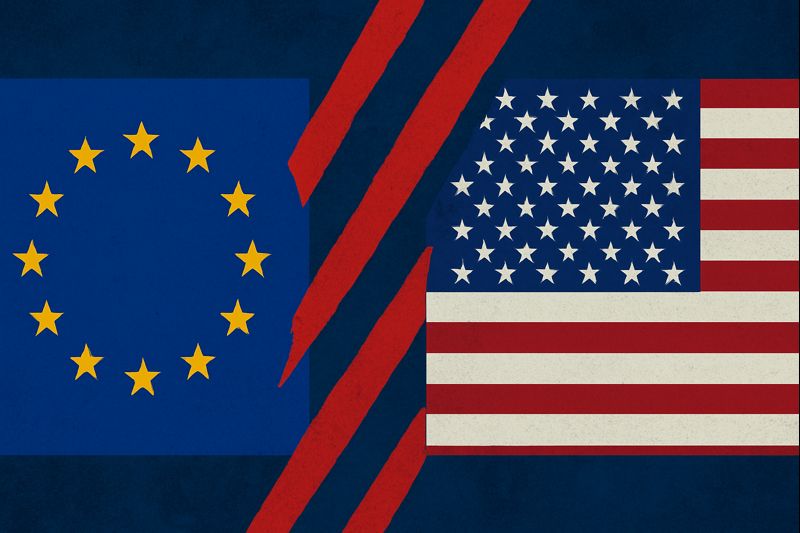
Relations between Europe and the United States are facing renewed strain as disagreements emerge over economic priorities and security strategies, exposing underlying differences within the transatlantic partnership. While both sides continue to emphasize shared values and strategic cooperation, recent policy disputes have highlighted diverging interests and approaches.
On the economic front, European officials have voiced concern over U.S. industrial and trade policies that they argue disadvantage European companies. Subsidy programs, protectionist measures, and competition over strategic industries such as green energy, technology, and defense manufacturing have fueled friction. European leaders warn that unchecked economic competition risks weakening cooperation at a time when global economic stability remains fragile.
Security policy has become another source of tension. While Europe remains closely aligned with Washington on support for Ukraine and NATO commitments, debates persist over burden-sharing, military spending, and long-term strategic autonomy. Some European governments are pushing for greater independence in defense decision-making, arguing that Europe must strengthen its own capabilities rather than rely excessively on U.S. leadership.
The disagreements come as geopolitical pressures intensify, including the war in Ukraine, instability in the Middle East, and rising competition with China. European policymakers fear that policy shifts in Washington—driven by domestic political dynamics—could affect long-term U.S. commitments to Europe’s security and economic interests.
U.S. officials, for their part, maintain that their policies are designed to protect national interests while reinforcing collective security. They argue that strong U.S. economic performance and military leadership ultimately benefit allies and contribute to global stability.
Despite the tensions, both sides stress that the transatlantic relationship remains fundamental. Ongoing diplomatic engagements aim to manage disagreements through dialogue, coordination mechanisms, and compromise. Analysts note that disputes between allies are not new but reflect a changing global order in which Europe seeks a stronger voice and greater strategic leverage.
As Europe and the United States navigate these challenges, the durability of their partnership will likely depend on their ability to balance competition with cooperation—ensuring that economic and security disagreements do not undermine one of the world’s most important alliances.