

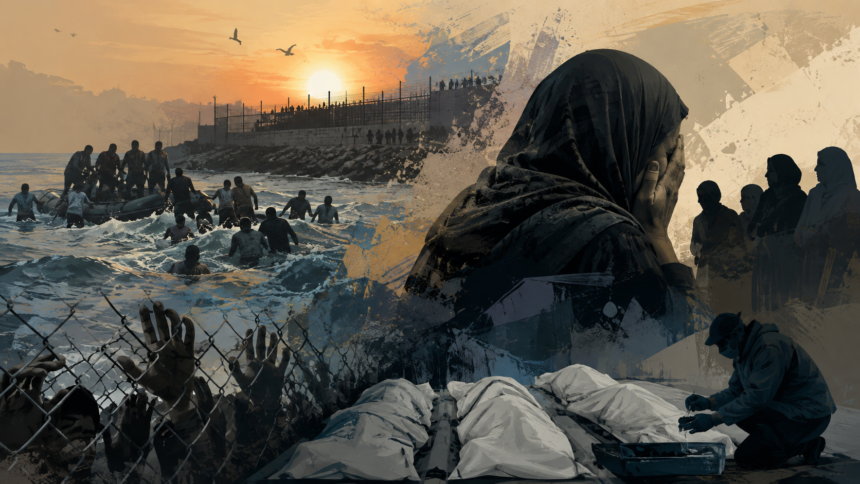
Spanish authorities have reinforced police and forensic teams in Ceuta as they work to identify 80 migrants whose bodies were recovered following the unprecedented mass crossing from Morocco into the Spanish enclave. Most of the victims are expected to be buried in Ceuta in the coming days.
The scale of the tragedy has placed extraordinary pressure on Ceuta’s forensic services. Authorities have established additional facilities, including a temporary morgue, while specialists conduct DNA testing in an effort to establish the identities of victims. Only a small number have so far been positively identified through Spanish records.
The deaths followed a massive migration surge in which Spanish authorities said around 72,000 people entered Ceuta from Morocco within a short period, overwhelming local infrastructure and emergency services. Many migrants attempted dangerous sea crossings around the border barriers, contributing to the high death toll.
Across the border in Morocco, families continue searching for relatives who disappeared during the chaotic crossing. Spanish authorities have shared information with Moroccan officials and established a border office where families can report missing people and provide information that could assist identification efforts.
Officials say unidentified victims will be buried in Ceuta, with arrangements being made to respect Muslim burial practices. Bodies that are successfully identified could be returned to their countries or families if repatriation is requested.
The tragedy has intensified debate over migration management at Ceuta, one of the European Union’s few land borders with Africa, while leaving families on both sides of the border waiting for answers about relatives who remain missing.