

By using this site, you agree to the Privacy Policy and Terms of Use.
Accept
Euro Post.Euro Post.
Notification Show More
Aa
  • My Europe
    • Europe News
    • Social Issues
    • Immigration
    • EU Policies
    • EU Updates
  • World
    • Africa
    • Global Conflicts
    • Human Rights
    • Middle East
    • Latin America
    • Ukraine Crisis:
  • Business
    BusinessShow More
    Lamborghini Unleashes the Temerario: A Hybrid Supercar Poised to Surpass the Huracán
    July 26, 2025
    Is Waze Nearing the End of the Road? Google Maps Growth Raises Questions About the Future of the Navigation App
    July 26, 2025
    Germany Secures Fourth Conviction in €195 Million EU-Wide VAT Fraud Case Tied to Covid Mask Scam
    July 25, 2025
    AstraZeneca Commits $50 Billion Investment in U.S. Amid Tariff Pressures
    July 23, 2025
    ASML Shares Fall as Trump-Era Tariff Fears Cloud 2026 Growth Outlook
    July 17, 2025
  • Sport
  • Travel
  • Culture
    • Art/Design
    • Literature
    • Music
    • Film – TV
    • Fashion
Reading: Some Countries Support a Position Closer to the United States, While Other Countries Call for Avoiding Military Escalation
Share
Aa
Euro Post.Euro Post.
  • My Europe
  • World
  • Business
  • Sport
  • Travel
  • Culture
Search
  • My Europe
    • Europe News
    • Social Issues
    • Immigration
    • EU Policies
    • EU Updates
  • World
    • Africa
    • Global Conflicts
    • Human Rights
    • Middle East
    • Latin America
    • Ukraine Crisis:
  • Business
  • Sport
  • Travel
  • Culture
    • Art/Design
    • Literature
    • Music
    • Film – TV
    • Fashion
Follow US
  • Advertise
© 2021 Euro Post Agency.com. All Rights Reserved.
Euro Post. > Blog > My Europe > Europe News > Some Countries Support a Position Closer to the United States, While Other Countries Call for Avoiding Military Escalation
Europe News

Some Countries Support a Position Closer to the United States, While Other Countries Call for Avoiding Military Escalation

World News
By World News Published March 4, 2026
Share

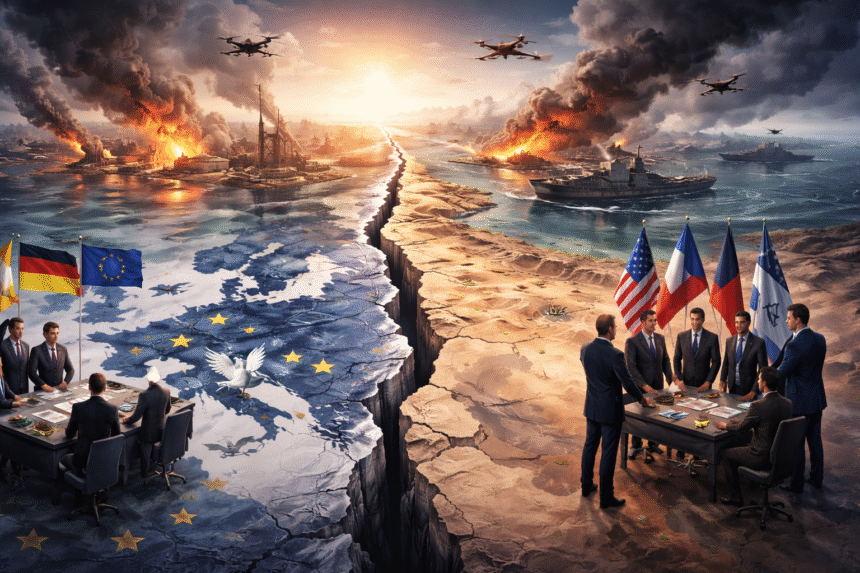
The escalating conflict linked to Iran and the broader Middle East crisis has exposed deep policy divisions within Europe. While European leaders generally agree that the situation threatens regional stability and global security, they remain sharply divided over how the continent should respond. The debate reflects competing strategic priorities: maintaining strong transatlantic ties with the United States on one side, and avoiding further military escalation on the other.

Contents
A Split Over Strategic AlignmentCalls for Restraint and DiplomacyEconomic and Security ConcernsEurope’s Difficult Balancing ActLooking Ahead

A Split Over Strategic Alignment

Several European countries favor a position closely aligned with Washington. These governments argue that maintaining unity with the United States is essential to protecting Western security interests and deterring further destabilization in the Middle East. They believe that Iran’s actions and the risk of regional escalation require a strong response that includes political backing for American and allied security measures.

Countries in Eastern Europe and some Western European states often view transatlantic cooperation as a cornerstone of their security policy. For them, supporting the United States not only reinforces NATO solidarity but also signals a united front against potential threats to international stability.

Calls for Restraint and Diplomacy

At the same time, other European governments are urging caution. These countries warn that deeper military involvement could expand the conflict across the Middle East and trigger serious economic and humanitarian consequences. Instead of military escalation, they advocate diplomatic engagement, de-escalation, and renewed negotiations aimed at preventing a broader regional war.

Leaders promoting restraint argue that Europe has significant economic and political interests in maintaining stability in the Middle East. A wider conflict could disrupt global energy markets, intensify migration pressures, and create long-term security challenges for the European continent.

Economic and Security Concerns

The debate is not purely political. Economic considerations play a major role in shaping European positions. Europe remains sensitive to disruptions in energy supplies, especially after the shock caused by the war in Ukraine and the subsequent restructuring of global gas markets.

Officials fear that a prolonged conflict involving Iran could threaten key maritime trade routes and drive up energy prices, placing additional pressure on European economies that are still recovering from recent inflation and supply chain disruptions.

Europe’s Difficult Balancing Act

The current crisis highlights a recurring challenge for the European Union: reconciling different national priorities within a single foreign policy framework. While the EU often seeks to act collectively on international issues, member states frequently diverge when security interests and economic risks are involved.

As a result, Europe finds itself attempting to balance two competing goals—maintaining strong alliances with the United States while also preventing a broader military confrontation that could have far-reaching global consequences.

Looking Ahead

European leaders are expected to continue consultations in the coming weeks as the situation evolves. Whether the EU can develop a unified approach remains uncertain, but the debate itself reflects the complex geopolitical reality facing Europe today.

With tensions in the Middle East showing no immediate signs of easing, Europe’s response may ultimately shape not only its role in global diplomacy but also the stability of its own political and economic landscape.
You Might Also Like

Volkswagen Is Planning to Produce Self-Driving Commercial Vehicles in Europe in 2027

Some Countries, Like Hungary, Are Obstructing the New Sanctions Package Against Russia

The European Union Confirmed That It Does Not See an Immediate Impact of the Conflict in Iran on Gas Supplies

Investors Are Closely Watching Developments in the Middle East War and Its Impact on Energy

German Authorities Warn of the Possibility of Retaliatory Operations Within Europe

World News March 4, 2026 March 4, 2026
Share This Article
Facebook Twitter Whatsapp Whatsapp Email Print
What do you think?
Love0
Sad0
Angry0
Dead0
Previous Article European Countries Take New Security Measures in Cyprus After Drone Attack
Next Article A Drone Attack Targeted the British Akrotiri Base in Cyprus

Stay Connected

16k Like
85k Follow
45.6k Subscribe
Telegram Follow
- Advertisement -

Latest News

Volkswagen Is Planning to Produce Self-Driving Commercial Vehicles in Europe in 2027
Europe News
Some Countries, Like Hungary, Are Obstructing the New Sanctions Package Against Russia
Europe News
The European Union Confirmed That It Does Not See an Immediate Impact of the Conflict in Iran on Gas Supplies
Europe News
Investors Are Closely Watching Developments in the Middle East War and Its Impact on Energy
Europe News
Loading

Stay Informed,Europ’s Vioce Unfolded

Sign Up for Our Newsletter

Subscribe to our newsletter to get our newest articles instantly!

Loading
© 2022 Euro Post Agency. All Rights Reserved.