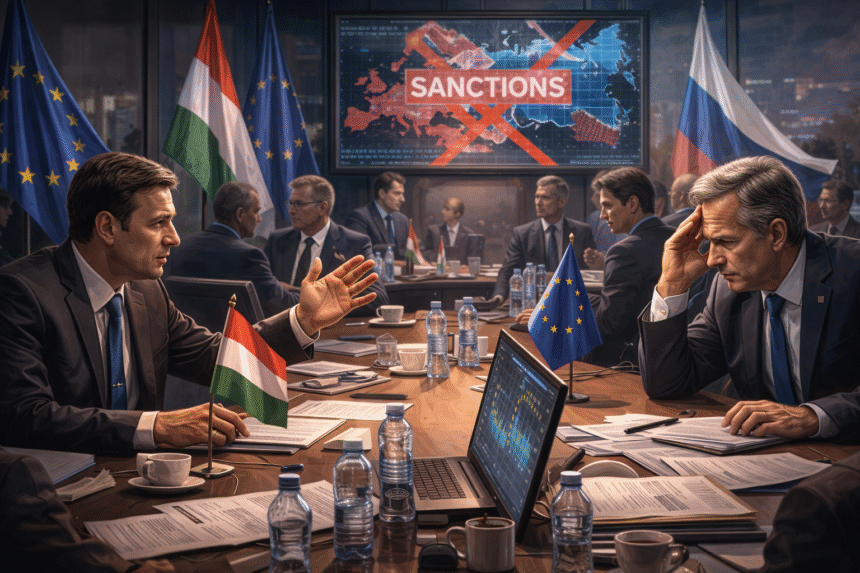
The European Union is facing renewed internal divisions as several member states, most notably Hungary, continue to obstruct the approval of a new sanctions package against Russia. The disagreement reflects growing tensions within the bloc over how far Europe should go in maintaining pressure on Moscow while protecting national economic interests.
A Divided European Response
Since the beginning of the war in Ukraine, the European Union has adopted multiple rounds of sanctions targeting Russia’s financial system, energy sector, and key industries. These measures were designed to limit Moscow’s ability to finance its military operations and weaken its economic influence.
However, adopting sanctions within the EU requires unanimous approval from all member states. This requirement has made negotiations increasingly difficult, as some governments express concerns about the economic consequences of additional restrictions.
Hungary’s Position
Hungary has emerged as one of the strongest critics of expanding sanctions against Russia. The Hungarian government argues that further economic restrictions could harm European economies, particularly in countries that still rely on Russian energy supplies.
Budapest has repeatedly called for a more cautious approach, warning that sanctions may have unintended consequences for European industries and consumers.
Hungarian officials have also emphasized the importance of maintaining dialogue with Moscow, suggesting that diplomatic engagement should remain part of Europe’s strategy.
Economic Concerns Within the EU
While Hungary is the most vocal opponent of new sanctions, it is not alone in expressing reservations. Several European countries have raised concerns about the potential economic impact of additional measures, especially in sectors such as energy, trade, and transportation.
Many governments are wary of introducing policies that could increase energy prices, disrupt supply chains, or weaken economic growth at a time when Europe is still dealing with inflation and global market uncertainty.
Pressure From Other Member States
Despite these objections, many EU countries continue to push for stronger sanctions against Russia. Governments supporting the new package argue that maintaining pressure on Moscow is essential for demonstrating European unity and supporting Ukraine.
They believe that easing sanctions or delaying new measures could undermine the credibility of the EU’s foreign policy and weaken its ability to influence the conflict.
The Challenge of European Unity
The ongoing debate highlights the structural challenge within the European Union’s decision-making process. While the bloc aims to present a unified front on major geopolitical issues, differing national interests often complicate efforts to reach consensus.
As negotiations continue, EU diplomats are attempting to find compromises that could satisfy hesitant countries while preserving the core objectives of the sanctions package.
An Uncertain Outcome
For now, discussions over the new sanctions package remain unresolved. European leaders are expected to continue negotiations in the coming weeks as they attempt to overcome internal divisions and maintain a coordinated response to Russia’s actions.
The outcome of these talks will likely shape not only the EU’s policy toward Russia but also the future cohesion of the bloc’s foreign policy strategy.