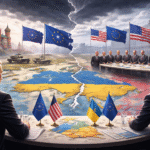


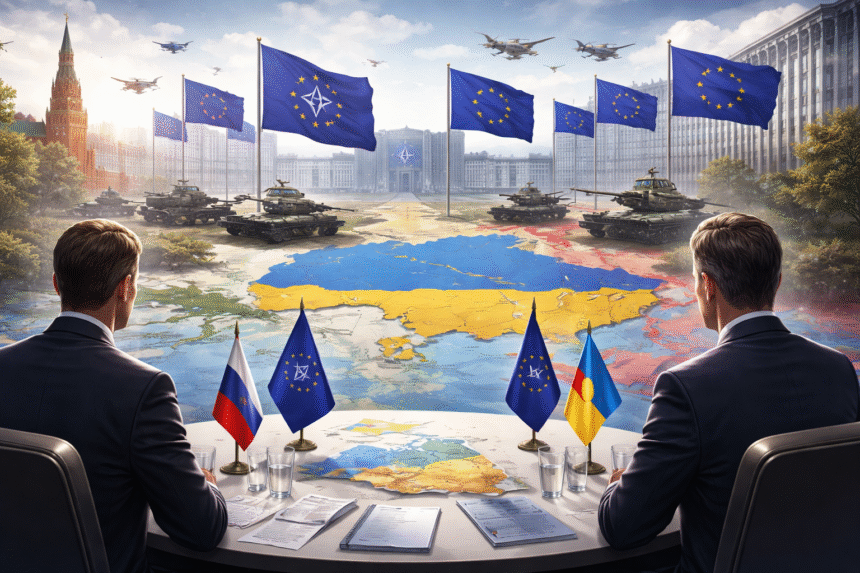
Russia announced it is legally prepared to confirm that it has no intention of attacking the European Union or NATO, a statement that comes as diplomatic efforts intensify to explore pathways toward ending the war in Ukraine.
According to Russian officials, the proposal would involve formal legal guarantees aimed at easing European security concerns and reducing fears of a wider regional escalation. Moscow insists that its military posture is defensive and that Western narratives portraying an imminent threat to Europe are politically motivated.
The declaration coincides with ongoing peace-related discussions surrounding Ukraine, where international mediators are seeking to de-escalate the conflict after nearly three years of war. Russian officials argue that addressing mutual security concerns—including NATO’s military expansion and arms deliveries to Kyiv—is essential for any sustainable settlement.
European leaders, however, have responded with caution. Several EU and NATO officials emphasized that any legal commitment must be matched by concrete actions on the ground, particularly regarding military operations in Ukraine and respect for international borders. Trust remains low, with past agreements cited as reasons for skepticism.
NATO reiterated that it does not seek confrontation with Russia but maintains that its defensive posture will remain unchanged as long as the war in Ukraine continues. EU officials echoed this position, stressing that European security policy is shaped by actions rather than declarations.
Analysts view Moscow’s statement as a strategic diplomatic signal—aimed at influencing negotiations, testing Western unity, and reshaping the narrative ahead of potential ceasefire frameworks. Whether the proposal evolves into a binding agreement will depend largely on developments in Ukraine and the willingness of all parties to compromise.
For now, Russia’s announcement adds a new layer to an already complex diplomatic landscape, underscoring how the future of European security remains closely tied to the outcome of the war in Ukraine and the broader relationship between Moscow and the West.