

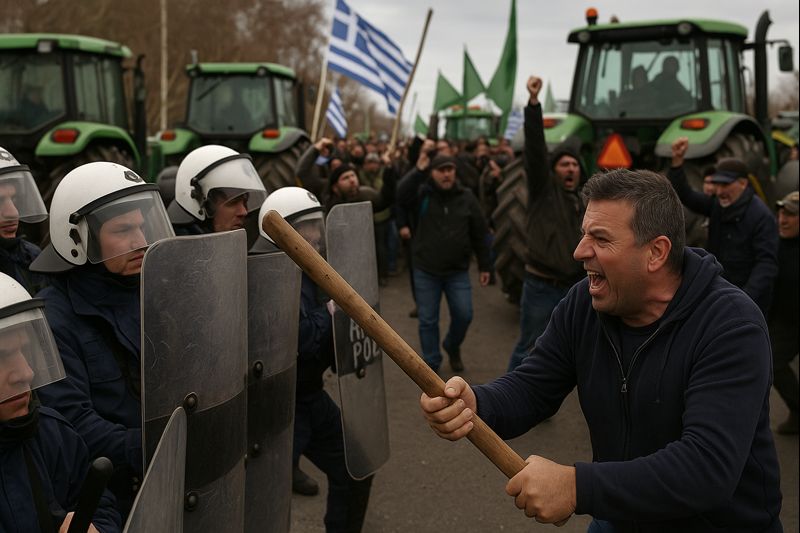
Tensions flared across parts of Greece as farmers staged protests that escalated into clashes with security forces, highlighting growing frustration over European Union agricultural policies and financial support mechanisms. The demonstrations reflect wider discontent among rural communities facing rising production costs, shrinking profit margins, and uncertainty over future EU subsidies.
According to local authorities, farmers used tractors to block major roads and access points near key cities, disrupting transport and supply chains. In several locations, confrontations broke out when police attempted to clear blockades, resulting in the use of tear gas and brief detentions. No serious injuries were reported, but the clashes underscored the intensity of the standoff.
Protesters argue that current EU support frameworks fail to adequately compensate for soaring fuel prices, fertilizer costs, and the impact of climate-related disruptions on crop yields. Many farmers say stricter environmental regulations tied to EU funding have increased financial pressure without providing sufficient transitional assistance.
Farmer unions have also criticized what they describe as unequal distribution of subsidies, claiming that smaller producers are disproportionately affected while large agribusinesses benefit most from existing mechanisms. They are calling for emergency aid, tax relief, and revisions to the EU’s Common Agricultural Policy (CAP) to better reflect current economic realities.
Greek authorities have acknowledged the challenges facing the agricultural sector but warned that prolonged disruptions could harm the broader economy. Government officials say they are seeking dialogue with farming representatives while working within EU budgetary constraints to secure additional support measures.
The protests in Greece mirror similar unrest among farmers across Europe, where demonstrations have erupted in countries including France, Germany, and Spain over comparable grievances. Analysts say the wave of protests highlights a deeper structural tension between EU climate goals, fiscal discipline, and the economic survival of traditional farming communities.
As negotiations continue, the situation remains volatile, with farmer groups vowing to escalate protests if their demands are not addressed. The unrest adds pressure on both the Greek government and EU institutions to find a balance between sustainability objectives and the livelihoods of Europe’s agricultural sector.