

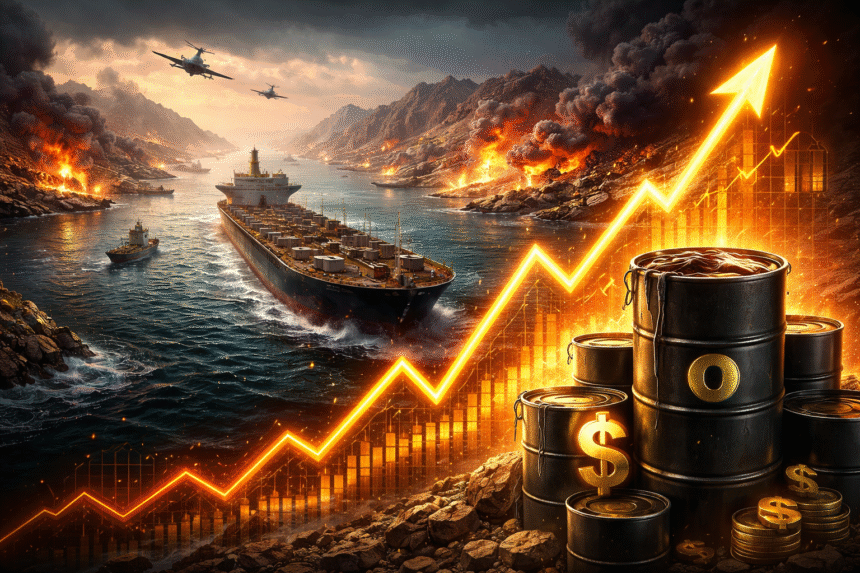
Global oil prices have surged sharply, surpassing $115 per barrel, as escalating tensions in the Middle East and the disruption of traffic through the Strait of Hormuz rattle energy markets and raise fresh concerns over global supply stability.
The Strait of Hormuz—one of the world’s most critical النفط chokepoints—handles nearly a fifth of global oil shipments. Any disruption to this route has immediate and far-reaching consequences, and the current situation has triggered fears of prolonged supply shortages, pushing prices to their highest levels in months.
For Europe, the impact is particularly severe. The region remains heavily dependent on imported energy, and the latest spike in oil prices is expected to translate quickly into higher fuel, transportation, and electricity costs. Economists warn that this could reignite inflationary pressures just as many European economies were beginning to stabilize after previous energy shocks.
Industries with high energy consumption—such as manufacturing, chemicals, and transportation—are likely to face the greatest strain. Germany, as Europe’s industrial powerhouse, is especially vulnerable, with rising costs threatening to slow production and weaken export competitiveness.
Meanwhile, governments across the continent are closely monitoring the situation, with some considering emergency measures to cushion the impact on households and businesses. These may include subsidies, strategic reserve releases, or coordinated action within the European Union to secure alternative energy supplies.
Financial markets have also reacted to the developments, with energy stocks gaining while broader indices show signs of volatility. Investors are increasingly pricing in the risk of a prolonged geopolitical crisis that could disrupt not only energy flows but also global trade routes.
Analysts caution that if tensions continue or escalate further, oil prices could climb even higher, deepening economic challenges for Europe. The situation underscores the region’s ongoing vulnerability to external energy shocks and highlights the urgency of accelerating diversification and energy transition strategies.