


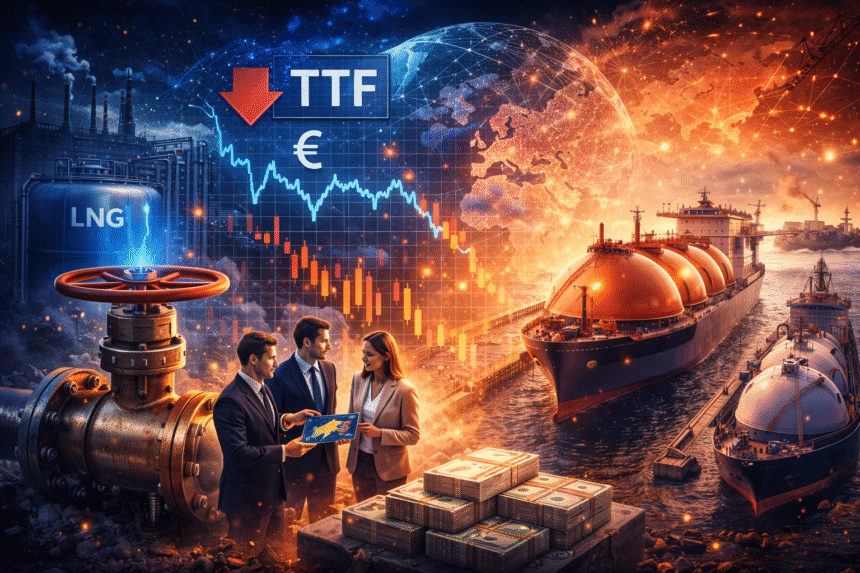
Natural gas markets are experiencing renewed volatility as global demand for liquefied natural gas (LNG) climbs sharply, even while Europe’s benchmark TTF index shows signs of softening. The divergence highlights how regional pricing dynamics are increasingly shaped by international supply routes and seasonal consumption trends.
Global Demand Pressures Supply
Energy analysts report that Asian and Latin American buyers are securing additional LNG cargoes ahead of peak seasonal demand, tightening availability on the spot market. Heatwaves in parts of Asia and efforts to rebuild reserves in emerging economies have pushed LNG prices higher globally.
Shipping congestion, longer delivery routes, and limited export capacity from key suppliers have further contributed to rising purchase costs — especially for buyers dependent on spot-market cargoes.
TTF Declines, but Not Without Risk
In contrast, Europe’s Title Transfer Facility (TTF) — the continent’s primary reference for gas trading — has edged lower. Large storage inventories, mild winter weather, and disciplined consumption across EU states have eased immediate price pressure.
However, traders caution that the decline may prove temporary. Any disruption in LNG deliveries, extended cold snaps, or outages at European terminals could quickly reverse the downward trend.
Structural Shifts Since the Energy Crisis
Since the 2022 energy shock, Europe has shifted dramatically away from pipeline gas imports from Russia and toward diversified LNG contracts. This transition has tethered European gas pricing more directly to global demand cycles, reducing the cushion once provided by long-term pipeline agreements.
As a result, even modest increases in LNG competition elsewhere can trigger price ripples across European markets.
Outlook
Experts expect continued volatility through the coming months as Europe balances healthy storage levels with heightened exposure to global LNG competition. Policymakers emphasize the importance of conserving energy, accelerating renewable deployment, and securing long-term supply agreements to reduce future vulnerability.
For consumers, the current environment signals that while short-term price relief may occur, sustained stability in natural gas costs remains far from guaranteed.