

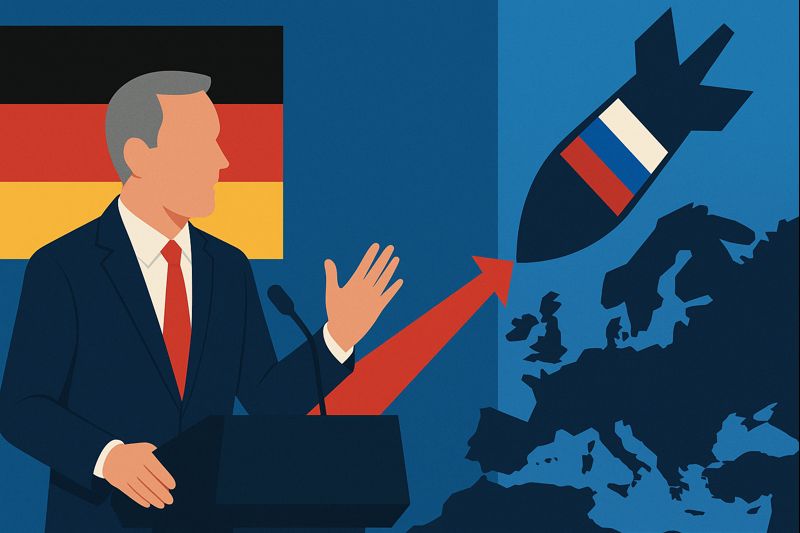
In a sharp escalation of rhetoric reflecting Europe’s increasingly fragile security environment, the Secretary-General of NATO issued a stark warning during a visit to Berlin, cautioning that Russia could soon shift its military ambitions toward Europe if deterrence and allied unity weaken.
Speaking alongside German officials, the NATO chief stressed that the continent is entering “the most dangerous period since the end of the Cold War,” pointing to Russia’s continued aggression in Ukraine, rapid militarization, and strategic messaging aimed at testing European resolve. His remarks come at a time when European governments are debating the future of defense spending, military readiness, and long-term support for Ukraine.
A Direct Message to European Capitals
The NATO leader’s statement — that Russia “could be Europe’s next target” — was interpreted as a direct call to EU and NATO members to accelerate defence reforms and invest more heavily in military capabilities. European intelligence assessments have increasingly warned that Moscow is restructuring its economy for sustained conflict, expanding military production, and intensifying hybrid operations across the continent.
German officials echoed this concern, saying Berlin must “prepare for a more aggressive and unpredictable Russia,” including bolstering air defense, cybersecurity, and frontline military personnel.
Ukraine at the Center of Europe’s Security Debate
The visit comes as fighting continues on multiple Ukrainian fronts. NATO believes that Ukraine remains the first line of defense against Russian expansion, and the alliance has urged member states to avoid “fatigue” in financial and military support.
The Secretary-General warned that if Russia achieves significant gains in Ukraine, its confidence and military appetite could expand beyond the current conflict, posing existential risks to Eastern and possibly Northern Europe.
Europe’s Military Response: Slow but Shifting
Over the past year, several European countries — including Germany, Poland, Finland, and the Baltic states — have accelerated defence spending, modernizing their arsenals and strengthening NATO’s eastern flank. But internal political divisions and economic constraints continue to delay broader strategic decisions.
In Berlin, the NATO chief highlighted Germany’s growing leadership role, praising recent commitments to increase defence funding, but urging “faster implementation and deeper cooperation.”
Hybrid Threats Growing Across Europe
Beyond conventional military concerns, NATO reports increasing Russian involvement in cyberattacks, sabotage plots, energy intimidation, and disinformation campaigns designed to destabilize European societies from within.
“The battlefield is no longer only physical,” the Secretary-General said. “Europe must be ready for attacks on its infrastructure, elections, energy networks, and information systems.”
A Resounding Call for Unity
The Berlin visit concluded with a unified message: Europe must not underestimate Russia’s long-term intentions. The NATO chief underscored that deterrence, strong alliances, and continuous support for Ukraine remain essential to preventing a broader conflict.
“History has taught us that ignoring threats does not make them disappear,” he said. “Europe’s security depends on the decisions we take now — not later.”