

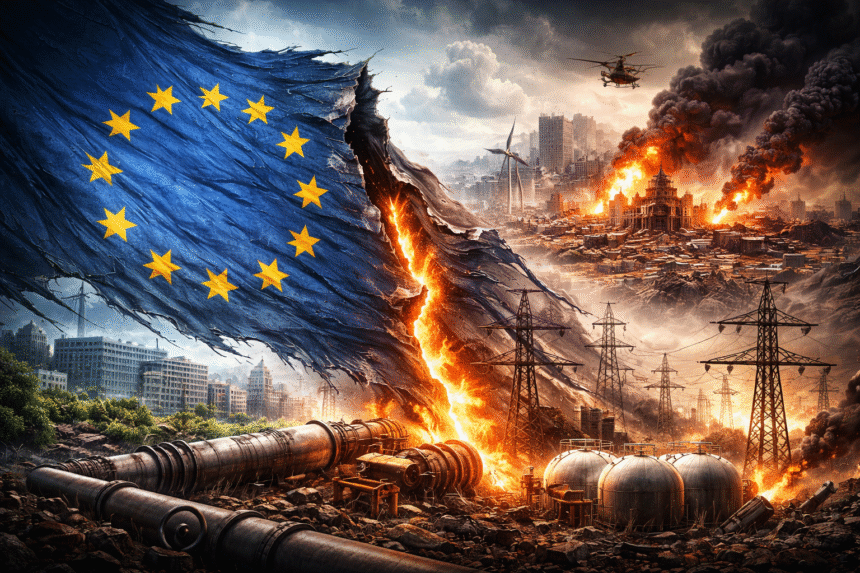
European experts are increasingly warning that the escalating war in the Middle East has evolved into a direct and immediate threat to both energy security and political stability across the continent.
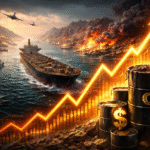
The growing instability in a region that remains central to global oil and gas supplies has raised alarm bells in European capitals. Analysts note that disruptions to critical energy routes—particularly through key chokepoints—are no longer a distant risk but an unfolding reality with tangible consequences for European economies.
Energy security, already strained by previous geopolitical crises, is once again under pressure. Europe continues to rely heavily on imported fossil fuels, and any sustained disruption in supply is likely to trigger sharp increases in prices, strain national budgets, and intensify competition for alternative energy sources. Experts caution that even short-term shocks could have long-lasting economic ripple effects.
Beyond the economic dimension, the political implications are equally concerning. Rising energy costs and inflation are placing additional burdens on households, fueling public dissatisfaction and increasing the risk of social unrest in several countries. Governments may face mounting pressure to intervene through subsidies and emergency measures, potentially widening fiscal deficits and complicating policy decisions.
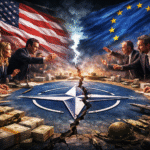
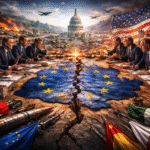
At the same time, divisions within Europe are becoming more visible. Differences in national interests, energy dependencies, and foreign policy approaches are making it harder for the European Union to present a unified response. Some countries are pushing for diplomatic solutions and de-escalation, while others are strengthening defense postures and aligning more closely with external allies.
Security analysts also warn that prolonged instability in the Middle East could have broader implications, including increased migration flows and heightened security risks, further testing Europe’s political cohesion.
In response, European policymakers are accelerating efforts to diversify energy supplies, invest in renewables, and strengthen strategic reserves. However, experts emphasize that these measures will take time to deliver results, leaving Europe exposed in the near term.
As the conflict continues, the intersection of geopolitics and energy dependence is once again shaping Europe’s strategic landscape—highlighting vulnerabilities that remain unresolved and challenges that are becoming increasingly urgent.