


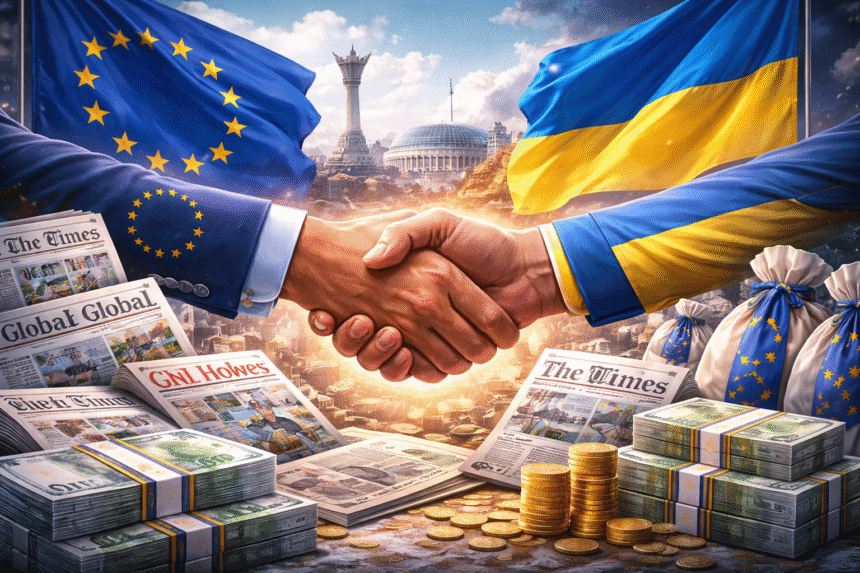
International media outlets have given extensive coverage to the European Union’s decision to provide a major financial loan to Ukraine, underscoring its importance as a cornerstone of Western support—even as disagreements persist over the direct use of frozen Russian assets.
Global reports describe the European loan agreement as a critical lifeline for Ukraine, aimed at stabilizing its economy, sustaining government operations, and supporting military needs amid the ongoing conflict. Analysts note that the scale and duration of the funding signal Europe’s long-term commitment to Kyiv, particularly at a time when uncertainty surrounds future international assistance.
Despite this broad support, coverage also emphasizes the political and legal divisions within Europe over whether Russian sovereign assets should be directly seized or used as collateral. Several countries continue to reject such measures, citing concerns over international law, financial stability, and the precedent it could set for global markets.
International commentators point out that the EU’s decision to proceed with a loan—rather than direct asset confiscation—reflects a pragmatic compromise. While it ensures immediate financial backing for Ukraine, it also avoids triggering legal challenges or diplomatic escalation that could arise from the direct repurposing of Russian funds.
Reports from major global outlets highlight that discussions on Russian assets remain unresolved and are likely to continue in parallel with financial aid mechanisms. Some analysts suggest that pressure will grow to find legally sound ways to channel profits generated from frozen assets, rather than the assets themselves, as a future funding source.
Overall, international coverage frames the European loan agreement as a strategic and symbolic move, reinforcing Europe’s role as a central pillar of support for Ukraine while revealing the complex balance between solidarity, legality, and financial risk that continues to shape the EU’s response to the war.