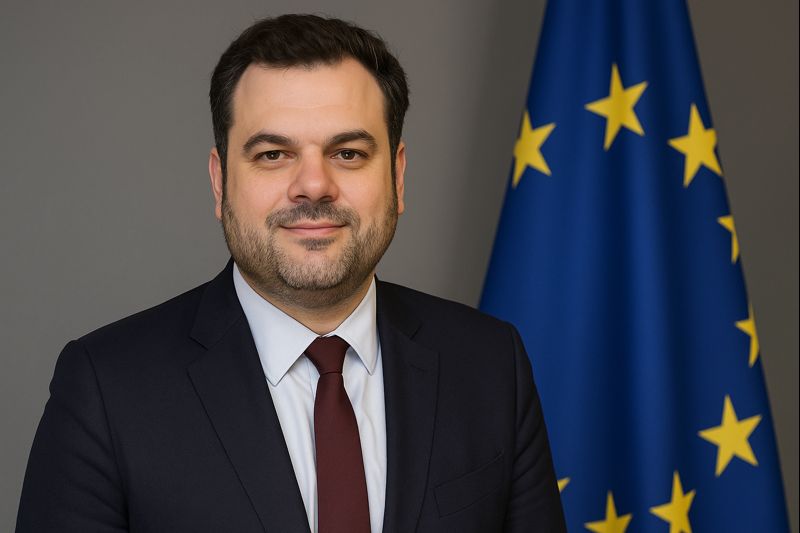
Greece has marked a significant political and economic milestone after Greek Finance Minister Kyriakos Pierrakakis was appointed president of the Eurogroup, a move widely seen as symbolic of the country’s recovery from one of the deepest financial crises in modern European history.
Pierrakakis’s elevation to the leadership of the Eurogroup—the informal body that brings together the finance ministers of the eurozone—signals a dramatic turnaround for Greece, which spent much of the past decade under strict international bailout programs and external financial supervision. Once viewed as the epicenter of Europe’s sovereign debt crisis, Greece is now being recognized as a credible economic actor within the eurozone.
European officials and analysts describe the appointment as a strong vote of confidence in Greece’s fiscal discipline, reform agenda, and economic stabilization. In recent years, Athens has recorded steady growth, improved debt sustainability, declining unemployment, and renewed investor confidence, helping to restore its standing among European partners.
As Eurogroup president, Pierrakakis will play a central role in coordinating eurozone economic policy, managing fiscal rules, responding to financial shocks, and guiding discussions on debt, inflation, and growth at a time of heightened global uncertainty. His leadership comes as the eurozone faces challenges ranging from geopolitical tensions and energy security to slowing growth and budgetary pressures across member states.
For Greece, the appointment carries powerful symbolic weight. A country once forced to accept externally imposed austerity measures is now positioned to help shape eurozone policy from within. Greek officials have emphasized that the moment reflects years of difficult reforms and social sacrifices made during and after the crisis.
Pierrakakis has pledged to act as a consensus-builder, stressing the importance of unity, financial stability, and balanced economic growth across the eurozone. His presidency is expected to focus on maintaining fiscal responsibility while allowing flexibility for investment and social cohesion.
Greece’s rise to a leadership role within the Eurogroup underscores a broader narrative of recovery and reintegration into Europe’s economic core—transforming the country’s image from a symbol of crisis to a participant in steering the future of the eurozone.