

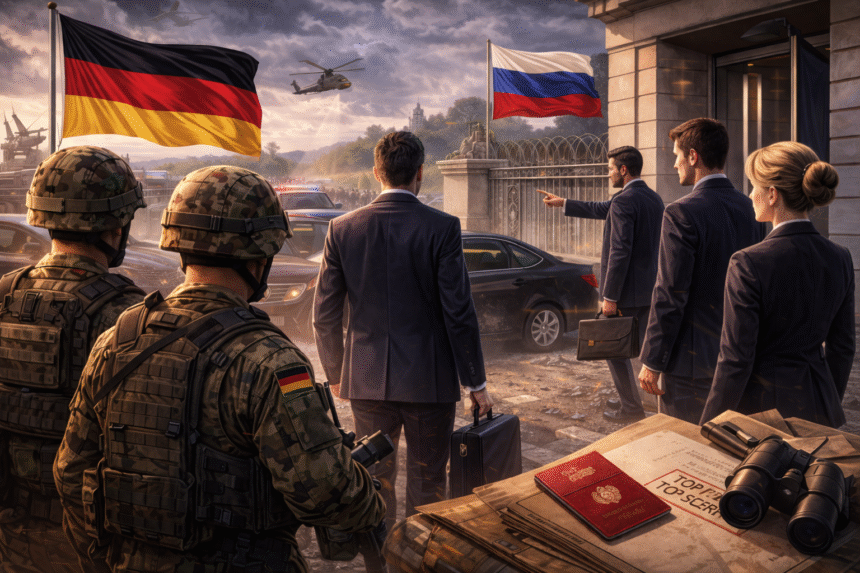
Germany has taken a diplomatic step against Russia after its military and security authorities accused a Russian diplomat of engaging in espionage activities, further straining already tense relations between Berlin and Moscow.
According to German officials, the diplomat was declared persona non grata following an investigation that concluded he had carried out intelligence-gathering activities incompatible with his diplomatic status. While authorities did not disclose specific operational details, they confirmed that the case involved matters linked to national security and military interests.
Military Counterintelligence Involvement
Sources familiar with the investigation said the case was identified through cooperation between the Bundeswehr, Germany’s military counterintelligence service, and civilian security agencies. Officials emphasized that Germany has intensified efforts to counter foreign espionage, particularly targeting sensitive military infrastructure, defense planning, and cooperation with NATO allies.
The German Defense Ministry stressed that diplomatic cover would not shield individuals involved in activities deemed hostile to Germany’s security interests.
Diplomatic Response and Fallout
The German Foreign Ministry formally informed the Russian embassy of the decision and ordered the diplomat to leave the country within a specified timeframe. Berlin described the move as a necessary defensive measure rather than a political escalation.
Russia rejected the accusations, calling them unfounded and politically motivated, and warned that it may respond with reciprocal measures against German diplomats in Moscow.
Broader Context
The incident comes amid a broader deterioration in German–Russian relations since the outbreak of the war in Ukraine, with Berlin adopting a more assertive security posture and aligning closely with NATO partners on counterintelligence and defense policy.
Analysts note that espionage-related expulsions have become increasingly common across Europe, reflecting heightened intelligence activity and reduced tolerance for covert operations conducted under diplomatic immunity.
As tensions persist, the episode underscores the fragile state of relations between Europe and Russia, where intelligence disputes are increasingly shaping diplomatic interactions.