

Germany is continuing to study new plans aimed at strengthening the country’s civil defense infrastructure and improving preparedness for emergency and war-related scenarios, as security concerns across Europe continue to rise amid growing tensions with Russia.
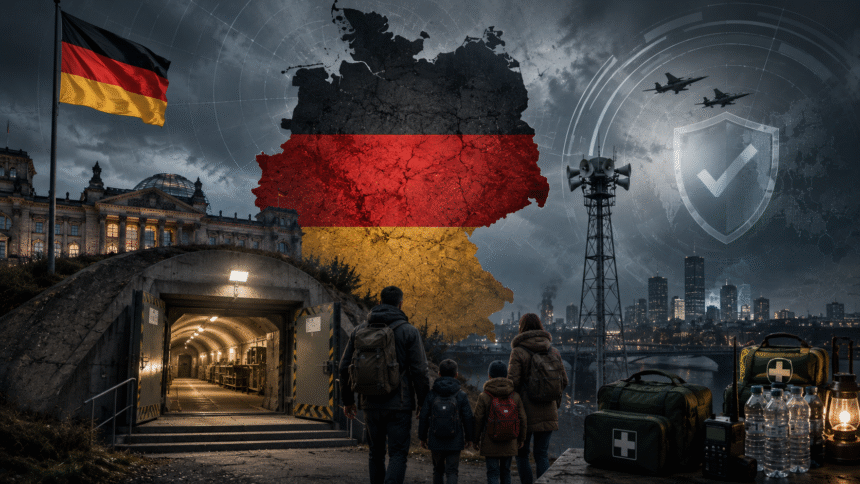
According to German officials, the proposed measures include expanding and modernizing civilian shelters, improving emergency response systems, strengthening communication networks during crises, and preparing the population for potential large-scale security disruptions. Authorities are also reviewing Cold War-era infrastructure that had been neglected for decades following the collapse of the Soviet Union.
The renewed focus on civil defense reflects broader concerns within Europe about regional stability, particularly after the continued escalation of the war in Ukraine and increasing fears of cyberattacks, sabotage operations, and hybrid warfare targeting European countries.
German security experts have warned that modern conflicts are no longer limited to traditional battlefields. In addition to military threats, governments across Europe are increasingly preparing for attacks on energy infrastructure, telecommunications systems, transportation networks, and digital services. Officials believe strengthening civil preparedness has become essential in an era of rising geopolitical uncertainty.
Reports indicate that Berlin is considering new investments in underground shelters, emergency supply storage facilities, backup power systems, and nationwide alert mechanisms. Some proposals also include updating public guidance on emergency survival procedures and expanding cooperation between federal authorities, local governments, and emergency services.
Germany’s defense policy has undergone major changes since the outbreak of the war in Ukraine. The government has already increased military spending, accelerated modernization programs for the armed forces, and expanded cooperation with NATO allies. The latest civil defense discussions are seen as part of a broader national security strategy aimed at improving resilience during potential future crises.
At the same time, German officials insist that the measures are precautionary and not an indication of an imminent military confrontation. However, political leaders acknowledge that Europe’s security environment has changed dramatically in recent years, forcing governments to reconsider preparedness policies that were largely deprioritized after the Cold War.
The debate has also sparked public discussion within Germany regarding national security, defense spending, and Europe’s long-term relationship with Russia. While some political groups support stronger preparedness measures, others warn against creating unnecessary fear among the population.
As tensions between Russia and Western countries continue, European governments are increasingly prioritizing both military readiness and civilian resilience, signaling a major shift in how Europe approaches security planning in the modern era.