

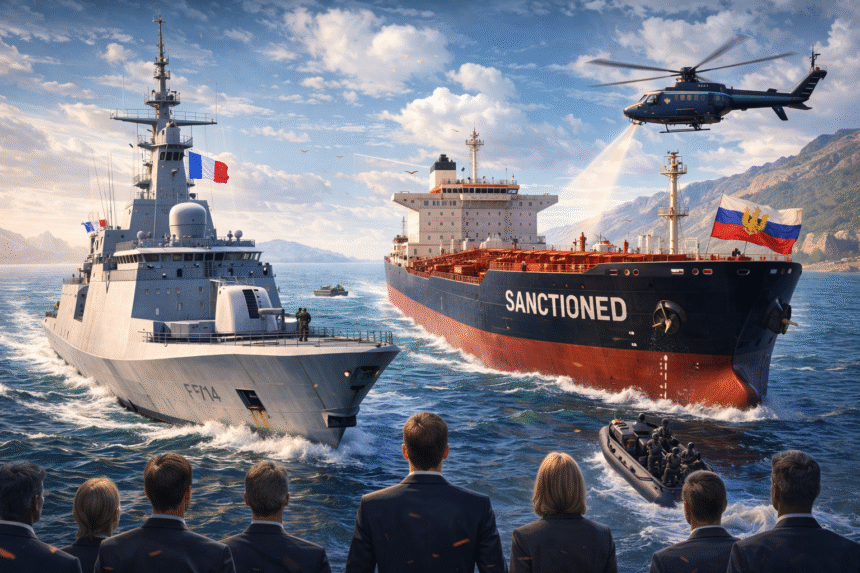
France has announced the interception of a Russian oil tanker operating in the Mediterranean Sea that was subject to international sanctions, underscoring growing European efforts to closely monitor Russian maritime activity and enforce existing restrictions.
According to French authorities, the operation was conducted as part of routine surveillance and enforcement measures aimed at ensuring compliance with sanctions imposed on Russian energy exports following the war in Ukraine. The tanker was reportedly tracked and intercepted after intelligence assessments raised concerns about its cargo, route, and legal status.
Strengthening Sanctions Enforcement
French officials stated that the interception reflects France’s commitment to upholding international sanctions regimes and preventing circumvention tactics increasingly used by Russian-linked shipping networks. These tactics often involve opaque ownership structures, ship-to-ship transfers, and frequent changes of flags or routes to evade detection.
While no immediate military escalation was reported, authorities emphasized that the action sends a clear message that sanctioned vessels will be identified and monitored in European waters.
Mediterranean as a Strategic Zone
The Mediterranean has become a key corridor for Russian maritime activity, particularly as Moscow seeks alternative routes to sustain energy exports amid Western restrictions. European naval and coast guard forces have intensified patrols in recent months, focusing on compliance with maritime law, environmental safety, and sanctions enforcement.
French defense sources noted that monitoring such activity is not only an economic issue but also a matter of regional security, given the potential risks posed by unregulated tanker operations, including environmental hazards and intelligence-gathering activities.
European Coordination
The interception comes amid broader European coordination on maritime security, with France working alongside EU and NATO partners to share intelligence and enhance surveillance capabilities across strategic waterways.
Analysts say the move reflects a shift from symbolic sanctions enforcement to more direct operational measures, aimed at closing loopholes and reinforcing the credibility of European restrictions on Russian exports.
As geopolitical tensions continue, European governments are expected to maintain heightened vigilance in the Mediterranean and other key maritime regions, signaling that sanctions enforcement remains a central pillar of Europe’s response to Russian actions.