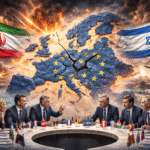


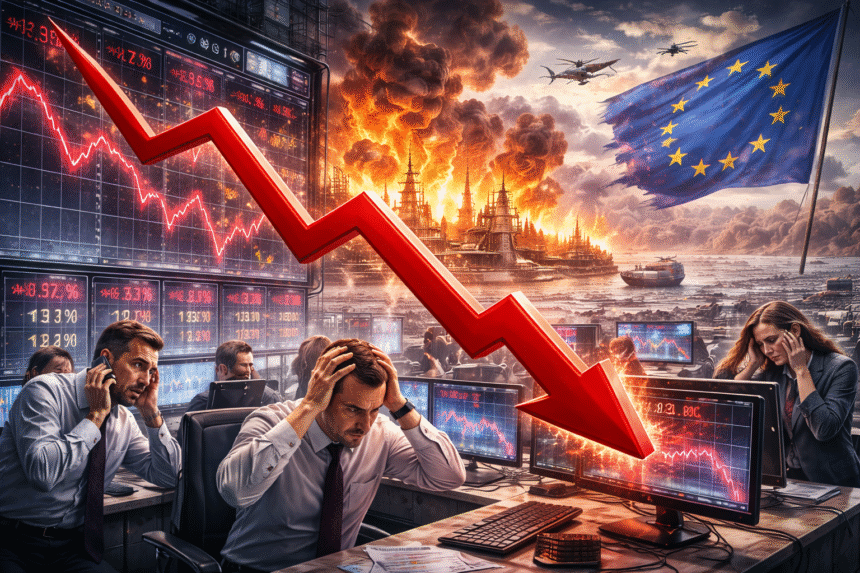
European financial markets experienced a noticeable decline as escalating tensions in the Middle East triggered uncertainty among investors and raised concerns about the potential impact on global energy supplies and economic stability.
Major stock indexes across the continent recorded losses as markets reacted to geopolitical developments linked to the growing conflict involving Iran and regional actors. Investors moved cautiously, with many shifting funds toward safer assets amid fears that the crisis could disrupt key trade routes and increase volatility in global commodity markets.
Energy concerns were among the primary factors affecting market sentiment. The Middle East remains one of the world’s most important regions for oil and gas production, and any escalation in conflict risks interrupting supply chains that are vital to both Europe and the broader global economy. As a result, oil prices showed upward pressure, adding further uncertainty to European markets.
Shares in sectors sensitive to energy costs and international trade were particularly affected. Industrial companies, airlines, and transportation firms saw declines as investors anticipated higher operating costs if fuel prices continue to rise. At the same time, defense and energy-related stocks showed relatively stronger performance as markets adjusted to the evolving geopolitical landscape.
European policymakers have been closely monitoring the situation, aware that prolonged instability in the Middle East could complicate economic recovery efforts across the continent. Inflation remains a key concern for many European economies, and any sustained increase in energy prices could place additional pressure on households and businesses.
Financial analysts say that markets are likely to remain sensitive to developments in the region. Even limited military incidents can quickly influence investor confidence, particularly when they occur in areas connected to major energy infrastructure or global shipping routes.
Despite the immediate decline, some experts believe the long-term impact on European markets will depend on whether the conflict expands further or remains contained. For now, uncertainty continues to dominate investor sentiment, highlighting how geopolitical tensions can quickly ripple through global financial systems.