

As the United States’ extraordinary military operation in Venezuela — culminating in the capture and removal of President Nicolás Maduro — reverberates across the world, Europe’s response has been notably cautious, divided, and at times muted. This stance reflects broader tensions within European foreign policy over how to balance commitments to international law, transatlantic alliances, and geopolitical interests.
Diverse Reactions — From Criticism to Caution
European leaders have not spoken with one voice about the U.S. operation. While Spain’s Prime Minister Pedro Sánchez delivered one of the clearest criticisms, describing the U.S. intervention as a “terrible and very dangerous precedent” that violates international law and sets worrying norms for global sovereignty, other capitals have been more reserved.
France, for example, raised legal and normative concerns about the operation’s violation of the United Nations Charter’s principle against the use of force, even as Paris welcomed the fall of what it had long considered an illegitimate regime. Meanwhile, British Prime Minister Keir Starmer avoided direct judgment, emphasizing the need to establish facts and maintain careful diplomatic engagement.
Germany’s response echoed this cautious line: Berlin stressed the risk of escalation and the necessity of a political resolution grounded in international law, reflecting internal debate within the ruling coalition about how to address the unprecedented nature of the U.S. action.
European Union’s Official Line: Law and Restraint
At the institutional level, the European Union’s diplomatic leadership called for calm, restraint and respect for international law and the UN Charter, urging all parties to avoid escalation while reiterating that Venezuelans themselves should decide their future. This formal position underscores the EU’s attempt to uphold legal norms even amid pressure from events unfolding far beyond its borders.
Despite this official stance, many analysts say European reactions have been relatively muted, avoiding overt condemnation of the United States. Critics argue that such cautious language — focused on procedural concerns rather than explicit rebukes — reflects Europe’s strategic calculation to preserve close ties with Washington, especially in light of ongoing security cooperation related to other international crises like the war in Ukraine and Arctic tensions.
Why the Reluctance? Strategic and Political Constraints
Commentators and diplomatic observers point to several reasons behind Europe’s reluctance to issue strong public criticism of the United States:
- Transatlantic security ties: European reliance on U.S. support for NATO’s deterrence posture, especially on Russia’s eastern flank, makes capitals wary of rifts with Washington.
- Fear of geopolitical fallout: Some leaders are concerned that a strong rebuke could fuel unilateralism by other major powers or weaken coordinated Western approaches to global challenges.
- Diplomatic recalibration: Europe appears to be trying to balance its long-stated commitment to international law with pragmatic recognition of the geopolitical influence of its closest ally.
Division Within Europe Itself
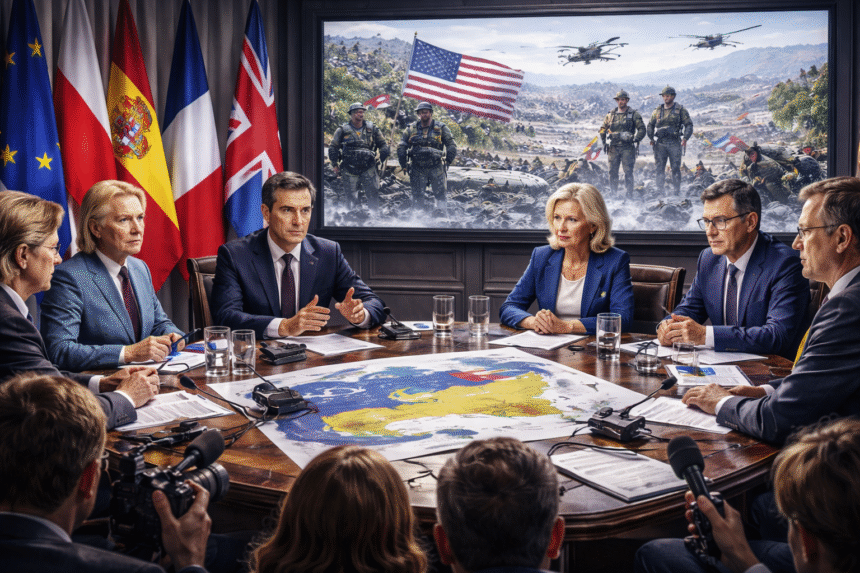
The mood in Brussels and European capitals is not monolithic. While nations like Spain and France have been more vocal in condemning aspects of the U.S. operation, others have opted for neutral or supportive phrasing, or have chosen to sidestep direct criticism. This fragmentation highlights broader debates within Europe about national sovereignty, the law of nations, and the future of the liberal international order.
As one commentary put it, Europe’s careful response reveals a strategic dilemma: Europe wants to uphold international norms and rule-based order, yet it also seeks to maintain vital alliances and avoid deep transatlantic conflict — even when those alliances test those very norms.
Looking Ahead
Europe’s stance on this issue may set important precedents. How European leaders navigate their relationships with Washington — amid U.S. interventions abroad, evolving global power dynamics, and internal divisions — could shape the continent’s diplomatic posture for years. Whether this cautious approach strengthens Europe’s role as a mediator or further erodes its moral authority on international law remains a topic of ongoing debate among policymakers and analysts alike.