


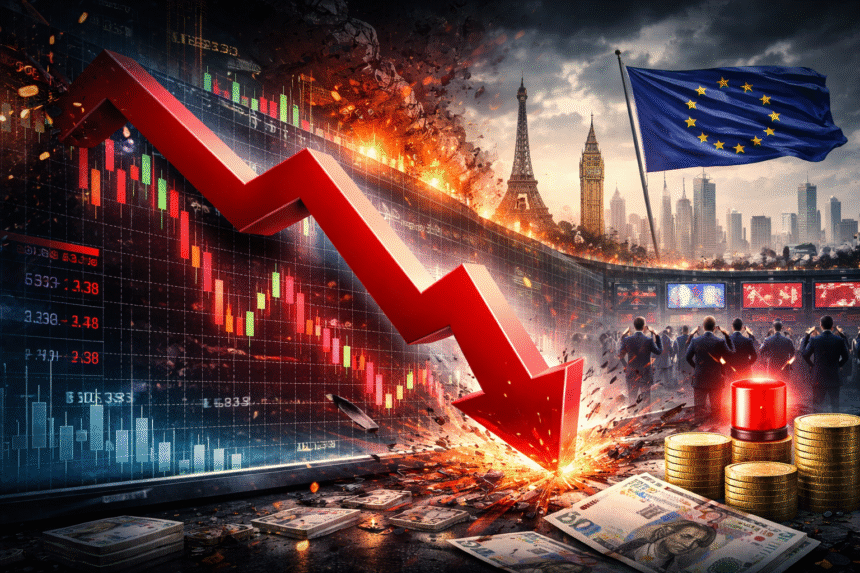
European stock markets have fallen to their lowest levels in nearly four months, as escalating geopolitical tensions continue to unsettle investors and fuel uncertainty across global financial markets.
The pan-European Stoxx 600 index recorded a notable decline, reflecting widespread losses across key sectors. Energy volatility, driven by instability in the Middle East, combined with broader economic concerns, has intensified selling pressure in recent trading sessions.
Investor sentiment has been particularly affected by fears of prolonged disruption to global energy supplies, following heightened tensions around critical transit routes. The resulting surge in energy prices has raised concerns about inflation, corporate costs, and overall economic growth within the eurozone.
Major European indices mirrored the downward trend, with banking, industrial, and manufacturing stocks among the hardest hit. Analysts note that these sectors are especially sensitive to rising energy costs and global trade uncertainty.
Market volatility has also been exacerbated by cautious investor behavior, with many shifting capital toward safer assets such as gold and government bonds. This risk-off sentiment highlights growing concerns that geopolitical instability could translate into a broader economic slowdown.
The decline in the Stoxx 600 underscores Europe’s vulnerability to external shocks, particularly in energy and trade. Despite efforts to diversify energy sources in recent years, the continent remains exposed to disruptions stemming from global conflicts.
European policymakers are closely monitoring the situation, as sustained market weakness could impact business confidence and investment flows. Some economists warn that continued instability may complicate central banks’ efforts to manage inflation while supporting economic growth.
Looking ahead, market direction will largely depend on geopolitical developments. Any signs of de-escalation could help restore investor confidence, while further tensions may deepen market losses and prolong uncertainty.
For now, European markets remain under pressure, caught between rising geopolitical risks and fragile economic conditions—raising concerns that the current downturn could extend in the weeks ahead.