

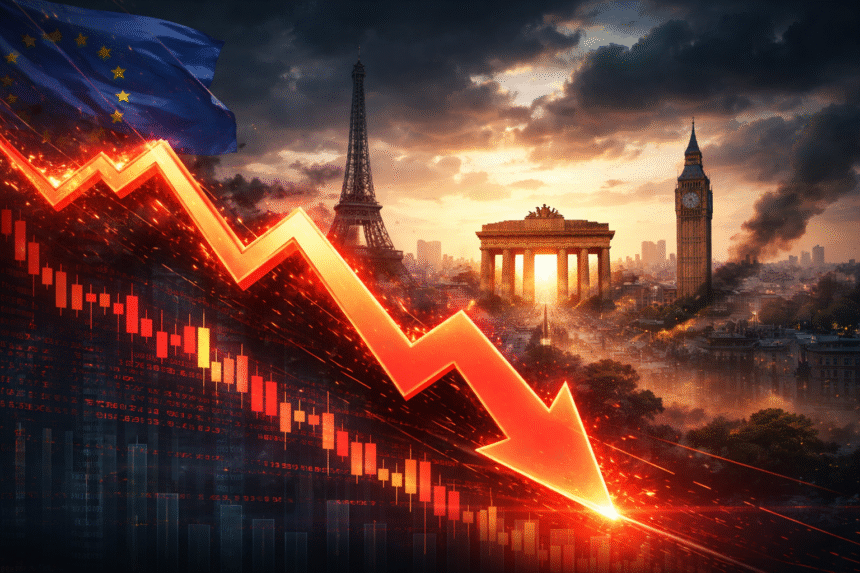
European stock markets have dropped sharply, reaching their lowest levels in four months, as escalating geopolitical tensions and fears of a prolonged conflict weigh heavily on investor sentiment.
Major indices across the continent—including Germany’s DAX, France’s CAC 40, and the pan-European STOXX 600—recorded significant losses amid uncertainty surrounding the ongoing war in the Middle East and its potential global spillover effects. Investors are increasingly concerned that the conflict could disrupt energy supplies, trade routes, and overall economic stability.
One of the primary drivers behind the market downturn is the surge in energy prices. With tensions affecting key النفط and الغاز corridors—particularly around the Strait of Hormuz—European economies, already sensitive to energy shocks, are facing renewed pressure. Rising fuel and electricity costs are expected to impact industrial output, inflation, and consumer spending across the region.
In addition to energy concerns, financial markets are reacting to broader geopolitical risks. The possibility of further military escalation, involvement of additional regional powers, and uncertainty over diplomatic outcomes have created a risk-averse environment. As a result, investors are moving away from equities toward safer assets such as gold and government bonds.
Banking and industrial sectors were among the hardest hit, reflecting fears of slowing economic growth and tightening financial conditions. Meanwhile, defense and energy companies saw relative gains, benefiting from increased demand and strategic positioning during times of conflict.
European policymakers are now facing mounting pressure to respond. Calls are growing within the European Union for coordinated action to stabilize energy markets, ensure supply security, and protect economic resilience. However, political divisions among member states over how to address the crisis may complicate a unified response.
Looking ahead, market volatility is expected to persist. Much will depend on how the geopolitical situation evolves in the coming days and whether diplomatic efforts can ease tensions. Until then, European markets are likely to remain under pressure, with investors closely monitoring developments on both the political and economic fronts.