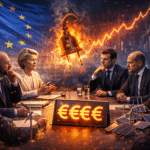



The European Parliament has officially voted to support a gradual ban on Russian gas imports, including both natural gas and liquefied natural gas (LNG), by 2027, marking a decisive step in the European Union’s push toward energy independence and reduced reliance on Moscow.
The vote, held yesterday in Strasbourg, reinforces the EU’s long-term strategy to cut financial flows to Russia while strengthening Europe’s energy security in the wake of the Ukraine war. Lawmakers described the decision as both an economic and geopolitical necessity, aimed at ending what they see as Europe’s strategic vulnerability created by years of dependence on Russian energy supplies.
Under the approved framework, EU member states will progressively phase out imports of Russian pipeline gas and LNG over the next two years. The plan includes tighter restrictions on new contracts, limits on spot market purchases, and measures to ensure that existing long-term agreements are wound down in an orderly manner without disrupting energy supply or causing severe price shocks.
European officials emphasized that the ban is closely linked to the EU’s broader energy transition policies. These include expanding renewable energy capacity, accelerating investments in wind, solar, and hydrogen, increasing energy efficiency, and diversifying gas supplies through partnerships with alternative exporters such as Norway, the United States, and countries in the Eastern Mediterranean and Africa.
Supporters of the decision argue that the move will significantly weaken Russia’s ability to use energy as a political tool while reinforcing the EU’s commitment to a rules-based international order. They also highlighted that revenues from gas exports have played a key role in financing Russia’s military activities, making the phase-out a matter of moral and strategic responsibility.
However, the vote has also sparked debate within the bloc. Some lawmakers and member states expressed concerns about the potential impact on energy prices, industrial competitiveness, and vulnerable households, particularly in countries that remain more dependent on Russian gas. In response, the European Commission has pledged to strengthen energy solidarity mechanisms and provide targeted support to mitigate economic and social effects.
The decision builds on earlier EU measures that reduced Russian gas imports dramatically since 2022, when supplies fell from around 40 percent of EU consumption to a fraction of that level. The 2027 target is now seen as the final step toward severing energy ties with Russia altogether.
Observers note that the parliamentary vote sends a strong political signal, even as implementation will depend on national governments and regulatory bodies. If fully enacted, the ban would represent a historic shift in Europe’s energy landscape, reshaping supply chains, accelerating the green transition, and redefining the EU’s strategic autonomy in the years ahead.