


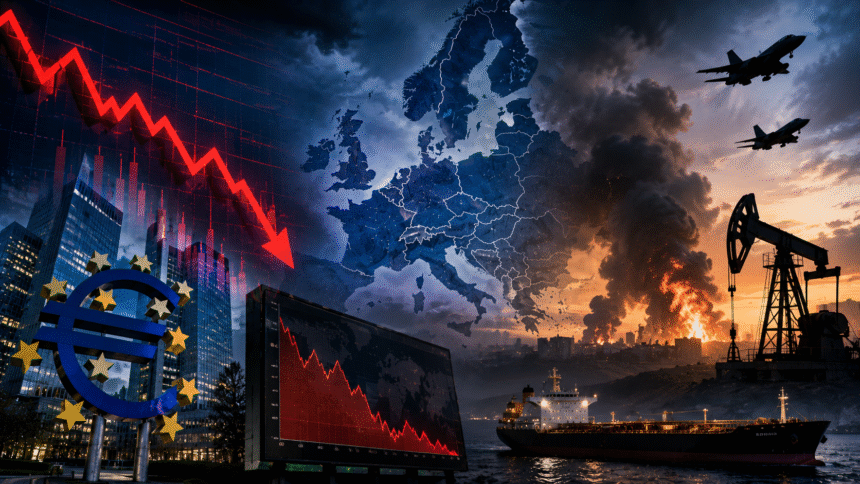
European financial markets came under renewed pressure this week as escalating tensions in the Middle East triggered concerns over global energy supplies and rising oil prices, pushing the pan-European STOXX 600 index to its lowest level in nearly a week.
Investors across Europe reacted cautiously amid fears that instability in the region could disrupt global energy flows and intensify inflationary pressures already weighing on the European economy. Energy markets responded quickly to the geopolitical uncertainty, with crude oil prices climbing as traders assessed the possibility of supply disruptions affecting major shipping routes and oil-producing regions.
The STOXX 600 index, which tracks hundreds of major European companies across multiple sectors, recorded broad declines led by transportation, manufacturing, consumer, and industrial stocks. Analysts said the market selloff reflected growing anxiety that prolonged instability in the Middle East could have ripple effects far beyond the energy sector.
European economies remain particularly sensitive to energy price fluctuations following the severe energy crisis triggered by the war in Ukraine. Although gas and electricity markets have stabilized compared to the peaks seen in 2022 and 2023, governments and investors remain highly alert to any geopolitical developments that could reignite inflation or strain supply chains.
Oil prices moved higher as investors worried about the security of maritime trade routes and the possibility of broader regional escalation. Shipping disruptions or military tensions involving key oil-exporting countries could significantly affect global supply levels, potentially increasing fuel, transportation, and manufacturing costs worldwide.
Financial analysts noted that European markets are especially vulnerable because many industries across the continent still face slow growth, high interest rates, and fragile consumer demand. Rising energy prices could further complicate the European Central Bank’s efforts to balance inflation control with economic stability.
The decline in stock markets also reflected broader investor uncertainty about the global economic outlook. Safe-haven assets such as gold and government bonds saw increased demand as traders moved away from riskier investments amid geopolitical instability.
Energy companies were among the few sectors to benefit from the market turbulence, with shares of major oil and gas firms rising alongside crude prices. However, airlines, transportation companies, and heavy manufacturing industries faced sharper declines due to concerns about higher operational costs.
European policymakers are closely monitoring developments as fears grow that a prolonged geopolitical crisis could undermine the continent’s economic recovery. Several governments have already warned about the risks posed by renewed energy volatility, particularly during a period of persistent inflation and weakened industrial growth.
The situation has also revived debates about Europe’s long-term energy security strategy. Since reducing dependence on Russian energy following the Ukraine war, European nations have worked aggressively to diversify energy imports and strengthen renewable energy investments. However, the latest tensions demonstrate how global geopolitical instability continues to influence Europe’s economic vulnerability.
Market strategists say investor sentiment is likely to remain highly sensitive in the coming days, especially if tensions in the Middle East escalate further or begin affecting energy infrastructure and international shipping lanes.
For now, the drop in European markets serves as another reminder that geopolitical crises thousands of kilometers away can still rapidly reshape financial confidence, energy prices, and economic expectations across Europe.