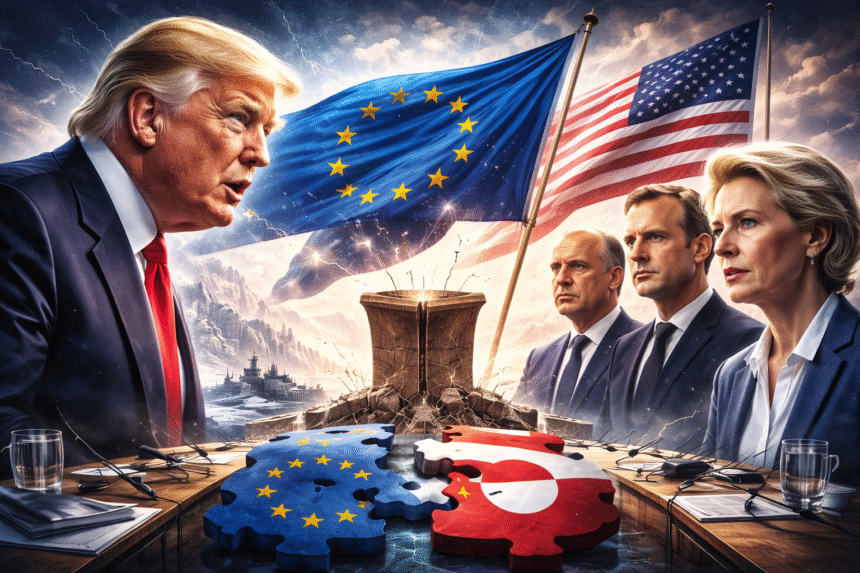
The relationship between Europe and the United States has long been built on alliance, common security interests, and shared democratic values. Yet the rhetoric of former U.S. president Donald Trump — and the continued influence of Trump-style politics in Washington — has exposed deep tensions across European leadership circles.
Behind closed doors, many European leaders acknowledge an uncomfortable truth: in some areas, Trump’s critique of Europe resonates. At the same time, they express deep reservations about his confrontational style, unpredictable decision-making, and willingness to undermine institutions that have shaped transatlantic relations for decades.
Where Europe Quietly Agrees
Several European leaders — particularly in Central and Eastern Europe — share elements of Trump’s skepticism toward bureaucracy and slow-moving institutions. They argue that parts of the European Union have become overly dependent on external powers for defense and energy, and that Trump’s blunt reminders about NATO burden-sharing, however controversial, forced necessary discussions.
Others admit privately that his warnings about China’s growing economic influence were not entirely misplaced. Only after years of pressure did European states begin re-evaluating strategic sectors such as telecommunications, ports, and advanced technology partnerships.
In these areas, Trump’s message — that Europe must become more self-reliant — hit a nerve.
Where Europe Draws the Line
But agreement stops there.
European leaders are deeply uneasy with Trump’s transactional approach to alliances, where commitments appear conditional and policies shift rapidly with political mood. Many in Brussels and major capitals fear that such unpredictability weakens collective defense and emboldens rivals.
They also worry about the erosion of diplomatic norms. Trump’s harsh public criticism of European governments and institutions often bypassed established diplomatic channels, creating an atmosphere of mistrust rather than constructive reform.
A Divided European Response
The commentary across European newspapers, think-tanks, and political offices reflects a divided but increasingly realistic perspective:
- Trump forced Europe to confront real vulnerabilities.
- His method, however, risked destabilizing long-standing alliances.
- The challenge now is addressing structural issues without breaking the partnerships that have kept Europe secure.
For leaders in Paris and Berlin, the lesson has been clear: Europe must strengthen its own strategic autonomy while preserving its transatlantic partnership — a delicate balancing act that requires cooperation, not confrontation.
A Future Defined by Caution
As debates intensify over the future of NATO, EU military coordination, and global economic security, European leaders remain cautious. They recognize that Washington will remain a crucial ally, regardless of who governs — but they are increasingly preparing for scenarios where U.S. priorities shift dramatically.
In this uncertain environment, the transatlantic relationship is no longer taken for granted. Instead, it is being re-examined, reshaped, and—at times—quietly renegotiated.
The result is a complex mix: partial agreement with Trump’s diagnosis, strong disagreement with his prescription, and a growing awareness that Europe must chart a steadier, more independent course.