

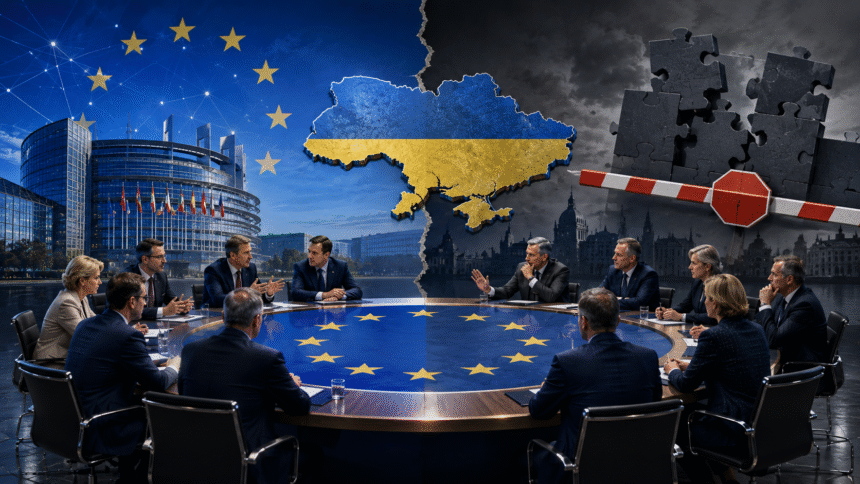
Divisions have emerged among European Union member states over the pace of Ukraine’s accession process, highlighting the complex political and economic challenges facing the bloc as it considers future enlargement.
The issue has become a key topic at the European summit in Brussels, where leaders are debating whether negotiations with Kyiv should be accelerated. Several countries argue that Ukraine’s efforts to implement reforms and its strategic importance to European security justify a faster path toward membership. They view closer integration with Ukraine as a long-term investment in stability and a strong signal of continued European support.
However, other member states have expressed reservations about speeding up the process. Critics point to the significant political, economic, and institutional reforms that Ukraine must still complete before meeting the standards required for membership. Concerns have also been raised about the potential financial impact of enlargement on the EU budget and agricultural support programs.
Some governments believe that moving too quickly could create tensions within the bloc and undermine the credibility of the accession process, which has traditionally been based on strict conditions and extensive reforms. They argue that all candidate countries should be treated according to the same criteria, regardless of current geopolitical circumstances.
Supporters of Ukraine’s membership bid counter that the country has made substantial progress despite the challenges posed by the ongoing war. They argue that maintaining momentum in the accession talks is essential to encouraging further reforms and strengthening Ukraine’s ties with Europe.
The debate reflects broader questions about the future direction of the European Union, including how it should balance geopolitical considerations with institutional requirements. It also highlights the differing perspectives among member states regarding the pace and scope of future EU expansion.
While there is broad agreement that Ukraine’s future lies closer to Europe, the discussions in Brussels demonstrate that significant negotiations remain ahead before a consensus can be reached on the next steps in the accession process. The outcome of these debates could shape both Ukraine’s European aspirations and the future structure of the European Union itself.