

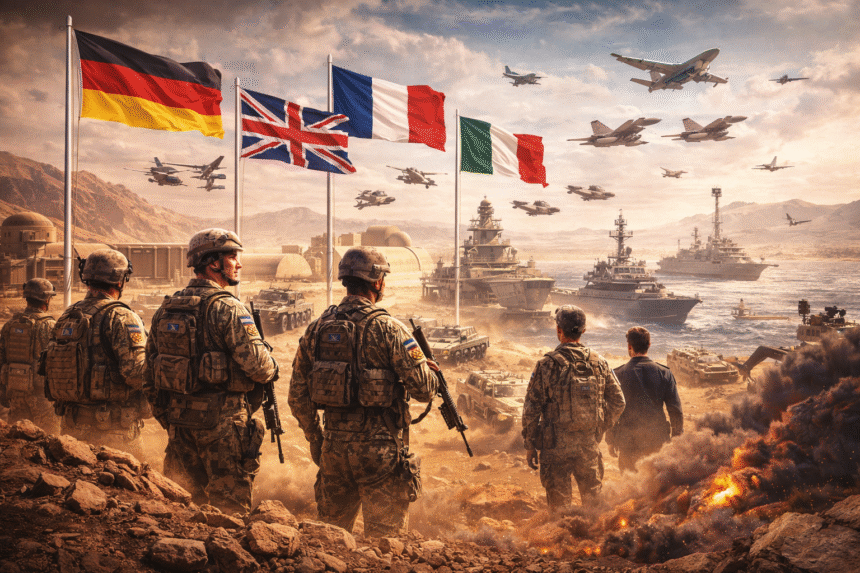
Amid escalating tensions and open conflict between the United States and Iran, European countries have moved beyond diplomatic positioning to take tangible military steps. Across the continent, governments are reinforcing their presence in the Middle East and granting access to strategic bases, signaling a shift toward active—though largely defensive—engagement in the crisis.
A Strategic Shift Toward Military Readiness
In recent weeks, several European nations have increased troop deployments, naval patrols, and air surveillance operations across key مناطق in the Middle East. These moves are not framed as offensive actions, but rather as preventive and defensive measures aimed at protecting shipping lanes, energy infrastructure, and European nationals abroad.
This marks a notable evolution in Europe’s role—from cautious observer to security actor responding to immediate risks.
Opening Bases for Allied Operations
A central component of this strategy has been the decision by multiple European countries to open their military bases for allied use. Airbases in Southern Europe and logistical hubs across the Mediterranean are now being used to support defensive missions, intelligence sharing, and rapid-response capabilities.
These bases provide critical infrastructure for:
- Air defense coordination
- Surveillance and reconnaissance missions
- Emergency evacuation planning
- Logistical supply chains for allied forces
While these actions stop short of direct combat involvement, they significantly enhance the operational reach of Western forces in the region.
Protecting Energy Routes and Trade
Europe’s increased military presence is closely tied to its economic interests. The Middle East remains vital for global energy flows, and any disruption—particularly in strategic chokepoints like the Strait of Hormuz—poses a direct threat to European economies.
Naval deployments have therefore focused on:
- Securing commercial shipping routes
- Deterring attacks on oil and gas infrastructure
- Monitoring potential threats from drones and missiles
This reflects a broader understanding that economic security and military security are now inseparable.
Balancing Defense and Escalation Risks
Despite these measures, European governments are carefully managing the optics and scale of their involvement. Officials consistently emphasize that their role is defensive, aiming to avoid being drawn into a broader regional war.
This balancing act is delicate. On one hand, Europe seeks to uphold its alliances and protect its interests; on the other, it remains wary of escalation and the political consequences of deeper military entanglement.
Internal Debate Continues
Even as deployments increase, the decision to expand military presence has not been universally accepted across Europe. Some governments and political factions question whether opening bases and supporting operations could gradually pull Europe into direct conflict.
This internal debate underscores the broader divide within Europe—between those who see military readiness as necessary deterrence and those who fear it may lead to unintended escalation.
Conclusion
Europe’s strengthened military presence in the Middle East reflects a pragmatic response to a rapidly deteriorating security environment. By opening bases and supporting defensive operations, European countries are seeking to protect their strategic interests without crossing into full-scale military involvement.
However, as the conflict continues, the line between defense and engagement may become increasingly blurred—leaving Europe to navigate one of the most complex security challenges in recent history.